
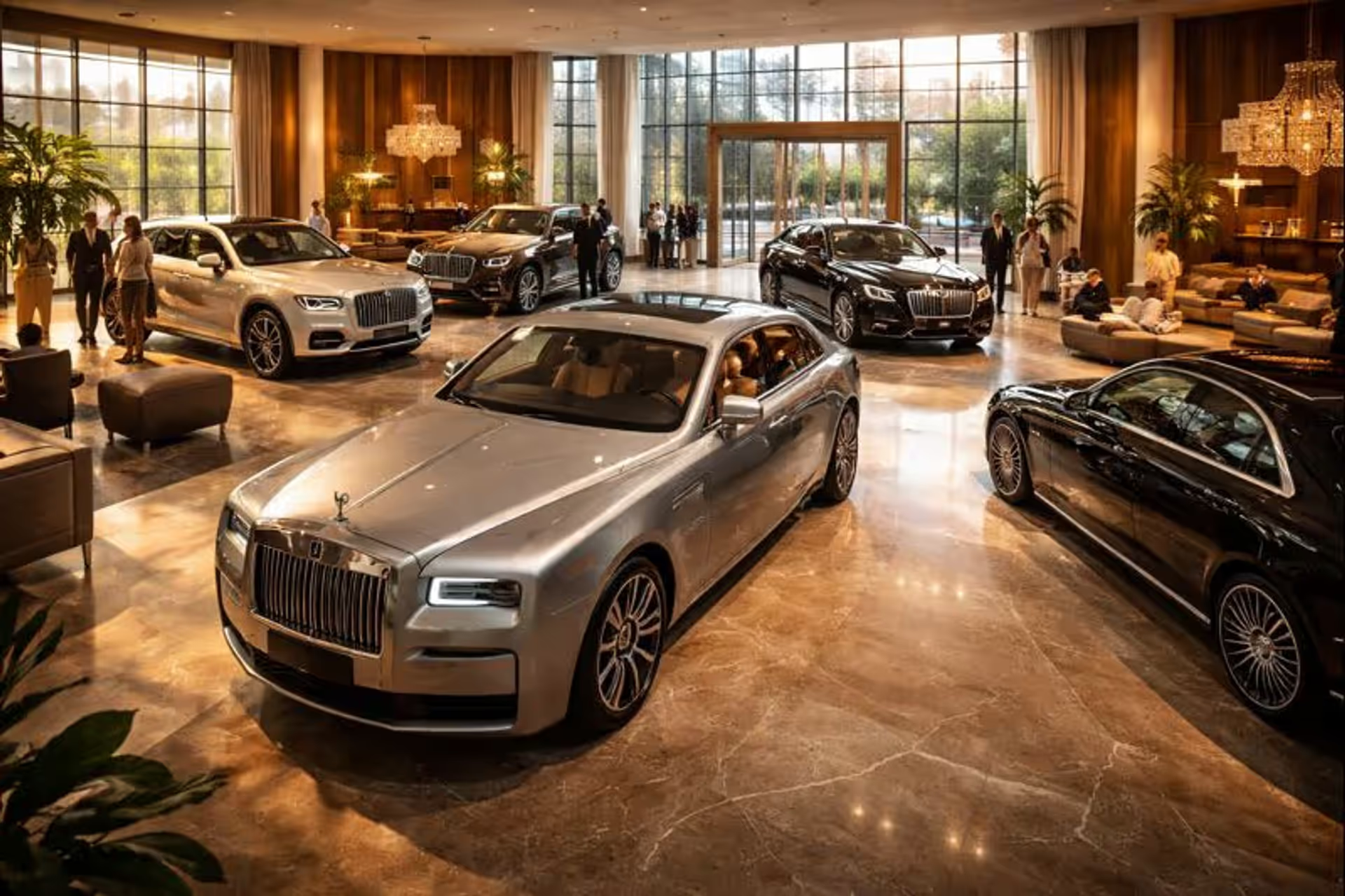
Luxury Car Market Forecast 2030: Why Demand for High-End Vehicles Keeps Growing
Luxury Car Market Forecast 2030: Why Demand for High-End Vehicles Keeps Growing

Introduction: The Golden Age of Luxury Automobiles
The global appetite for luxury automobiles has never been stronger. While mass-market automotive segments grapple with affordability challenges, supply chain disruptions, and uncertain demand, the luxury car market continues its remarkable expansion — seemingly immune to the economic headwinds affecting other segments. The wealthy, it appears, are not merely continuing to buy expensive cars; they are buying more expensive cars, more frequently, with less price sensitivity than ever before.
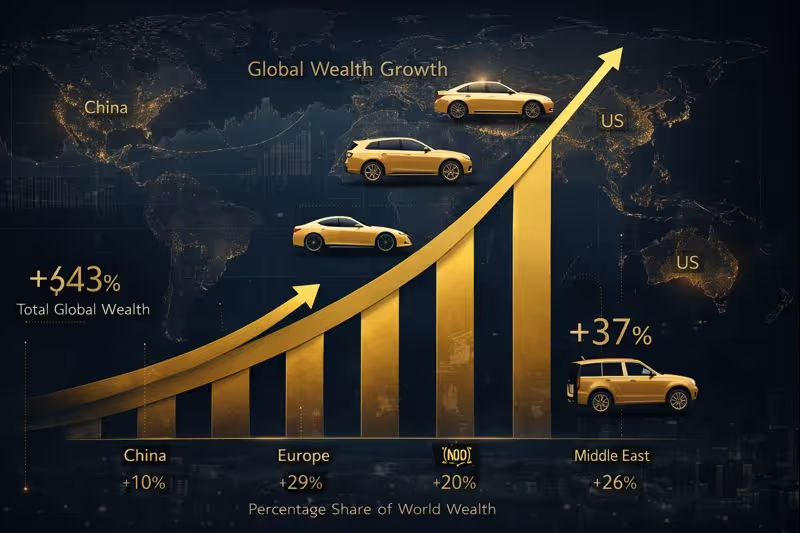
This divergence between luxury and mainstream automotive fortunes reflects deeper economic transformations reshaping global wealth distribution. The concentration of wealth among high-net-worth individuals has accelerated dramatically over the past decade, creating a buyer pool for ultra-premium products that expands even as middle-class purchasing power stagnates. The luxury vehicle market benefits directly from this wealth concentration — every new billionaire, every IPO windfall, every cryptocurrency fortune creates another potential customer for vehicles costing $200,000, $500,000, or more.
The numbers tell a compelling story. The global luxury car market is projected to exceed $700 billion by 2030, potentially doubling from current levels. Growth rates in the luxury automobile market consistently outpace overall automotive market expansion by significant margins. The most exclusive segments — vehicles above $200,000 — demonstrate the strongest growth, suggesting that demand strengthens rather than weakens as prices rise. This pattern inverts normal economic assumptions and reflects the unique dynamics of luxury consumption among the global wealthy.
Understanding luxury car market growth requires examining multiple interconnected factors: the demographic and geographic shifts in wealth creation, the evolving preferences of luxury consumers, the competitive dynamics among leading luxury car manufacturers, and the technological transformations — particularly electrification — reshaping what luxury vehicles offer and how they're perceived. Each factor influences the others in ways that create both opportunities and challenges for manufacturers positioning themselves in this lucrative segment.
"The luxury automotive market has decoupled from the broader economy in ways we haven't seen before," observes a luxury goods market analyst. "The wealth being created at the top is so substantial that luxury manufacturers cannot build vehicles fast enough to meet demand, regardless of price."
— James Anderson
This analysis examines the forces driving luxury car market forecast 2030 projections, how regional markets are evolving, which manufacturers are capturing growth, and how electrification is transforming the luxury segment. Understanding these dynamics illuminates not just where the luxury automotive market is heading, but why it has become one of the most attractive segments in the global economy.
Market Size and Growth Trajectory
The luxury car market size and its projected growth through 2030 reflect both current momentum and fundamental drivers that suggest sustained expansion. Quantifying this market and understanding its growth trajectory provides the foundation for analyzing the factors and players shaping luxury automotive's future.
Current Market Dimensions
The global luxury automotive market currently represents approximately $350-400 billion in annual sales, depending on definitional boundaries that vary across analyses. This figure encompasses vehicles from premium brands like BMW, Mercedes-Benz, and Audi through ultra-luxury marques like Rolls-Royce, Bentley, and Ferrari. The market spans price points from approximately $50,000 to over $3 million, creating a diverse landscape unified by positioning above mass-market alternatives.
Volume figures complement value measurements. Luxury vehicles represent approximately 10-12% of global new car sales by unit volume but a substantially higher percentage by value — reflecting the premium pricing that defines the segment. This value concentration means that luxury automotive's economic significance exceeds what unit share suggests, with implications for manufacturer profitability and industry structure.
The definitional boundary between luxury and premium segments affects market sizing significantly. Some analyses include all vehicles from traditionally premium brands (BMW 3-series, Audi A4, Mercedes C-Class) in luxury calculations; others restrict luxury to higher-tier offerings and treat entry-level premium models separately. The luxury vehicle classification has evolved significantly as the market has expanded, with new sub-segments emerging to capture increasingly fine distinctions. The luxury vs premium cars distinction matters because growth dynamics differ — entry-level premium faces affordability pressures that true luxury avoids.
Growth Projections Through 2030
The luxury car market forecast 2030 projections from major analysts converge around expectations of substantial expansion:
Table 1: Luxury Car Market Growth Projections
| Source/Metric | 2024 Value | 2027 Projection | 2030 Projection | CAGR |
| Global Market Size | ~$380B | $480-520B | $650-750B | 8-10% |
| Unit Sales (millions) | ~12M | 14-15M | 17-19M | 6-7% |
| Ultra-Luxury Segment | ~$45B | $60-70B | $90-110B | 12-15% |
| Luxury EV Share | ~15% | 30-35% | 50-60% | N/A |
| China Market Share | ~35% | 38-40% | 40-45% | N/A |
The luxury car market growth rate projections typically exceed both overall automotive market growth and broader economic expansion, reflecting the segment's unique demand drivers. According to the International Energy Agency, luxury segment electrification is proceeding faster than mass-market adoption, with premium buyers demonstrating stronger willingness to pay for electric powertrains. The differential growth rate means luxury's share of total automotive value increases over time — a trend that has persisted for over a decade and shows no signs of reverting.
The ultra luxury car market — vehicles above $200,000 — demonstrates the strongest projected growth rates. This segment includes brands like Rolls-Royce, Bentley, Ferrari, Lamborghini, and ultra-premium offerings from Mercedes-Maybach and BMW. The super luxury car segment appears almost entirely decoupled from economic conditions affecting mass markets, with demand limited primarily by production capacity rather than buyer willingness or ability to pay.
Regional Growth Variation
The global luxury car market forecast encompasses significant regional variation that shapes both aggregate projections and competitive strategies:
The luxury car market China represents the largest and fastest-growing regional opportunity. Chinese consumers now purchase approximately 35% of global luxury vehicles, a share expected to approach or exceed 40% by 2030. The luxury car market Asia more broadly — including Japan, South Korea, and emerging Southeast Asian markets — represents over half of global luxury demand. This Asian concentration has transformed how luxury manufacturers develop products, position brands, and allocate production.
The luxury car market United States remains the world's largest single-country market by value, benefiting from high average transaction prices and strong ultra-luxury demand. American luxury consumers demonstrate particular appetite for larger vehicles — full-size SUVs and extended-wheelbase sedans — that command premium pricing. The market's maturity means growth rates trail China and other emerging markets, but absolute size ensures continued importance.
The luxury car market Europe presents complex dynamics. European consumers created the luxury automotive concept and remain core customers for European luxury brands. However, Europe's luxury growth trails other regions, constrained by mature market conditions, taxation policies that penalize high-value vehicles, and demographic trends limiting buyer pool expansion. European manufacturers increasingly depend on non-European markets for growth while maintaining Europe as a brand heritage foundation.
Emerging markets luxury cars — particularly in the Middle East, India, and Latin America — represent smaller current volumes but strong growth potential. Wealth creation in these regions is producing new luxury buyers without the generational preferences for particular brands that characterize mature markets. These emerging luxury consumers show openness to new entrants and alternative positioning that established markets resist.
Drivers of Luxury Car Demand
Understanding luxury car demand growth requires examining the economic, demographic, and psychological factors that motivate purchases in a segment where practical transportation needs barely figure in buying decisions. The premium car demand trends shaping the market reflect fundamental shifts in how wealth is distributed and how the wealthy spend it.
The Wealth Concentration Effect
The most fundamental driver of luxury automotive consumer trends is the unprecedented concentration of wealth among high-net-worth individuals globally. According to wealth distribution research, the number of individuals with investable assets exceeding $1 million has grown dramatically over the past two decades; the number with assets exceeding $30 million — the ultra-high-net-worth population — has grown even faster. This wealth concentration directly expands the addressable market for ultra-luxury goods including automobiles.
The rising disposable income automotive connection operates primarily at the top of the income distribution. While median household incomes have grown slowly in most developed economies, incomes and wealth at the 95th, 99th, and 99.9th percentiles have expanded rapidly. A household earning $500,000 annually may purchase a BMW or Mercedes; a household earning $5 million annually purchases Bentleys and Ferraris. The growth in households at the highest income levels expands the market for the most expensive vehicles disproportionately.
High net worth consumer spending patterns further amplify luxury automotive demand. Wealthy individuals devote larger percentages of their spending to luxury goods and experiences as their wealth increases — a pattern economists call declining marginal propensity to save becoming declining marginal propensity to consume necessities. The ultra-wealthy have satisfied their basic needs many times over; additional wealth flows to luxury consumption including automobiles, watches, real estate, and art.
The geography of wealth creation matters for luxury automotive demand. The fastest wealth creation occurs in Asia — particularly China — and in technology and finance sectors concentrated in certain regions. These newly wealthy populations demonstrate strong appetite for luxury goods that signal achieved status, with automobiles among the most visible and socially meaningful status markers. The consumer income growth luxury goods connection operates most powerfully among new wealth, where conspicuous consumption serves status establishment purposes that older wealth may have transcended.
Demographic Shifts and New Buyer Profiles
The demographic profile of luxury car buyers is evolving in ways that expand the market while changing what buyers seek. These shifts create both opportunities and challenges for established luxury brands accustomed to traditional buyer profiles.
Younger wealthy buyers are entering the luxury market earlier than previous generations. Wealth creation through technology entrepreneurship, finance, and inheritance produces substantial purchasing power at younger ages. These buyers bring different preferences — stronger interest in technology and connectivity, greater openness to electric powertrains, less automatic loyalty to traditional luxury brands. The luxury automotive brands growth trajectory depends partly on capturing these younger buyers while retaining traditional customers.
Women represent a growing proportion of luxury car purchasers, both as primary decision-makers in households and as individual buyers. This demographic shift affects vehicle design (interior preferences, size considerations), marketing approaches, and retail experiences. Brands that adapt to female luxury buyers can capture market share; those that remain oriented toward traditional male buyer profiles risk losing relevance.
The geographic shift toward Asian buyers brings preferences that differ from Western luxury traditions. Chinese luxury consumers often prefer rear-seat comfort over driving engagement, reflecting chauffeur-driven usage patterns. They demonstrate strong brand consciousness but may prioritize different brands than Western consumers. The importance of digital features and connectivity exceeds that in Western markets. Successfully serving this market requires adapting products and positioning in ways that some traditional luxury brands execute more successfully than others.
Author: James Anderson;
Source: Wealth creation reshapes automotive desire.
Competitive Landscape: Who's Winning the Luxury Race
The luxury car brands market share competition involves established European marques defending historical positions against resurgent rivals and new entrants seeking to capture growth. Understanding the competitive dynamics illuminates which strategies succeed and how the landscape may evolve.
The Traditional Leaders
The leading luxury car manufacturers — Mercedes-Benz, BMW, and Audi — collectively dominate the premium segment while extending into higher luxury tiers through sub-brands and special editions. Their market positions reflect decades of brand building, global distribution networks, and manufacturing capabilities that new entrants cannot quickly replicate.
Mercedes-Benz maintains the leading position in global luxury sales by most measures, with particular strength in China and the United States. The brand's Mercedes-Maybach sub-brand serves the ultra-luxury segment, competing directly with Rolls-Royce and Bentley at price points exceeding $200,000. Mercedes has pursued aggressive electrification, with the EQ lineup expanding across segments. The brand's strategy combines heritage positioning with technology leadership claims.
BMW competes closely with Mercedes across most segments and markets, with particular strength in driving-focused positioning that appeals to enthusiast buyers. The brand's M performance division commands premium pricing and strong loyalty. BMW's electrification approach includes the i-series lineup while maintaining internal combustion offerings longer than some competitors. The brand demonstrates strength in North America and Europe while pursuing growth in China.
Audi occupies the third position among German premium brands, with strong technology positioning (Quattro all-wheel drive, virtual cockpit displays) that resonates with technology-oriented buyers. The Volkswagen Group relationship provides platform and technology sharing benefits while creating brand positioning complexity relative to group-mate Porsche. Audi's electrification through the e-tron lineup has proceeded steadily.
Ultra-Luxury Specialists
The top luxury car brands worldwide include specialists serving the ultra-high-net-worth segment where prices routinely exceed $300,000:
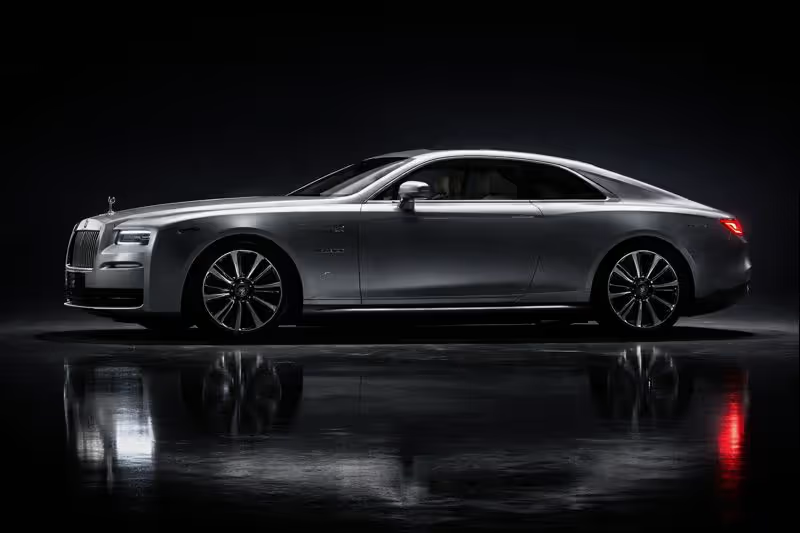
Rolls-Royce, owned by BMW Group, occupies the apex of automotive luxury. Recent years have seen record sales volumes as wealth concentration expands the buyer base for vehicles starting above $350,000. The brand's Cullinan SUV opened the ultra-luxury SUV segment, proving that traditional luxury brand equity extends to new body styles. Rolls-Royce's fully electric Spectre represents the brand's electrification commitment while maintaining the imperious presence and handcrafted luxury that define the marque. The Bespoke program enables virtually unlimited personalization, with some customers commissioning vehicles requiring over 1,000 hours of additional craftwork.
Bentley, part of Volkswagen Group, competes directly with Rolls-Royce while offering more driver-focused alternatives. The brand has achieved record sales volumes through SUV expansion (Bentayga) and successful model renewal. Bentley has committed to full electrification by 2030, a transition that will test whether electric powertrains can deliver the refinement and character that define the brand. The Mulliner personalization division creates bespoke vehicles rivaling Rolls-Royce in exclusivity and craftsmanship, serving customers for whom standard configurations — however luxurious — do not suffice.
Ferrari maintains unique positioning combining ultra-luxury pricing with motorsport heritage and deliberate production limitation. The brand's controlled scarcity — producing fewer vehicles than demand would absorb — sustains pricing power and brand exclusivity. Ferrari's electrification path includes hybrid models with full electric vehicles planned for later introduction. The brand's ability to command waiting lists extending years and to generate profit margins exceeding those of other luxury manufacturers demonstrates the power of carefully managed scarcity in luxury markets.
Lamborghini, Aston Martin, and McLaren serve performance-oriented ultra-luxury buyers with distinct positioning. Each brand navigates electrification while maintaining performance credentials that internal combustion engines historically delivered more convincingly than electric alternatives. Lamborghini's recent Revuelto hybrid demonstrates that electrification can enhance rather than compromise performance positioning. Aston Martin's partnership approach with Mercedes-Benz provides technology access that smaller independent manufacturers cannot develop alone. McLaren's technology-focused positioning aligns naturally with advanced powertrain development.
Luxury Electrification Leaders
The luxury EV market leaders include both traditional luxury brands adapting to electrification and new entrants building luxury positions from electric foundations:
Porsche has executed luxury electrification particularly successfully with the Taycan, demonstrating that electric powertrains can deliver driving engagement that enthusiasts demand. The brand's luxury positioning commands pricing premiums that subsidize electrification costs while maintaining profitability. Porsche's electric Macan expands EV offerings into the brand's highest-volume segment.
Tesla's positioning in the luxury segment reflects pricing and feature sets rather than traditional luxury brand attributes. The Model S and Model X compete at luxury price points; whether buyers perceive them as luxury vehicles or technology products varies by customer segment. Tesla's brand equity derives from technology leadership and Elon Musk's persona rather than heritage and craftsmanship.
Chinese brands including NIO, Li Auto, and others have established premium positions in their home market that increasingly challenge traditional luxury brands. NIO's pricing and positioning compete directly with BMW and Mercedes in China, with service innovations (battery swap, NIO Houses) creating differentiated value propositions. Whether these brands can achieve luxury positioning in Western markets remains to be demonstrated.
"The luxury competitive landscape is fragmenting in ways we haven't seen in decades," notes an automotive luxury strategist. "Traditional brands face challenges from electrification specialists and Chinese manufacturers simultaneously. The winners will be those who can maintain brand equity while adapting to technological transformation."
— James Anderson
The Electrification Transformation
The luxury electric vehicles market represents both the fastest-growing segment within luxury automotive and the most significant transformation in how luxury vehicles are conceived, marketed, and experienced. Understanding the luxury EV market forecast illuminates how electrification is reshaping luxury competition.
Electric Luxury Demand Dynamics
The electric luxury car demand reflects buyer motivations that differ from mass-market EV adoption. While mainstream EV buyers often prioritize economics and environmental concerns, luxury EV buyers emphasize technology cachet, driving experience, and social positioning. The premium EV market growth operates through different mechanisms than overall EV market expansion.
Luxury buyers demonstrate willingness to pay premiums for electric powertrains that mass-market buyers often resist. An EV premium that would be deal-breaking for a $35,000 car purchase becomes marginal for a $150,000 purchase. This willingness means luxury manufacturers can electrify profitably at current battery costs, subsidizing development with existing margins rather than requiring cost parity.
The technology positioning of electric vehicles aligns with luxury buyer preferences for innovation and novelty. Luxury consumption involves signaling taste and awareness; driving the latest technology reinforces this signaling in ways that driving updated internal combustion vehicles does not. The luxury car technology trends consistently show luxury buyers leading adoption of new features, from early navigation systems through advanced driver assistance to now electrification.
Performance characteristics of electric powertrains — instant torque, silent operation, smooth acceleration — prove particularly suited to luxury applications. The refinement that luxury brands pursue is easier to achieve with electric drivetrains that eliminate combustion noise and vibration. Performance figures (0-60 times, for example) favor electric powertrains at the high-performance levels luxury brands deliver.
Luxury EV Competitive Dynamics
The luxury electric car market has attracted both traditional luxury players and new entrants seeking to establish positions before the market matures:
Table 2: Luxury EV Competitive Positioning
| Brand | Key EV Models | Price Range | Positioning | Market Focus |
| Porsche | Taycan, Electric Macan | $90K-$200K+ | Performance luxury | Global |
| Mercedes-Benz | EQS, EQE, EQS SUV | $75K-$175K+ | Technology + comfort | Global |
| BMW | i7, iX, i5 | $70K-$150K+ | Driving dynamics | Global |
| Audi | e-tron GT, Q8 e-tron | $75K-$130K+ | Technology focus | Global |
| Lucid | Air | $70K-$250K | Range + luxury | North America |
| NIO | ES8, ET7, ET5 | $50K-$100K | Premium service | China (expanding) |
| Rolls-Royce | Spectre | $400K+ | Ultra-luxury | Global |
| Bentley | (Future models) | $200K+ | Grand touring | Global |
The competition reveals different strategic approaches. Porsche has pursued performance positioning that makes electric powertrains assets rather than compromises. Mercedes-Benz emphasizes technology and autonomous features that electrification enables. New entrants like Lucid compete on specifications (range, charging speed) that resonate with technology-focused buyers. Chinese manufacturers leverage domestic market scale to establish positions that may eventually extend globally.
The Technology Convergence
Luxury car technology trends and autonomous features luxury cars deployment increasingly converge with electrification. The technology architectures of electric vehicles — particularly their software-defined nature and electrical systems capacity — enable advanced features that internal combustion platforms cannot easily match.
Advanced driver assistance systems (ADAS) and progress toward autonomy concentrate in luxury segments where buyers can afford technology premiums and where the value proposition of productive time during transportation resonates. Features like hands-free highway driving, automated parking, and advanced safety systems debut in luxury vehicles before cascading to mainstream segments.
Connectivity and over-the-air update capabilities transform the luxury ownership experience in ways that traditional luxury could not offer. A luxury vehicle that improves after purchase — gaining features, refining performance, updating interfaces — creates value propositions impossible with static product definitions. The expectation of continuous improvement, established by Tesla and adopted by others, redefines what luxury customers expect from their vehicles.
Author: James Anderson;
Source: Electric refinement, without compromise.
Regional Market Deep Dive
The global luxury automotive market comprises distinct regional markets with different characteristics, growth trajectories, and competitive dynamics. Understanding these regional variations illuminates where growth originates and how manufacturers must adapt strategies to capture opportunities.
China: The Growth Engine
The luxury car market China has transformed from emerging opportunity to essential foundation of global luxury automotive business. Chinese consumers now purchase more luxury vehicles than any other national market, and the gap continues widening.
The scale of Chinese luxury demand reflects the country's remarkable wealth creation over recent decades. China now has more billionaires than the United States; its millionaire population grows by hundreds of thousands annually. This wealth concentration creates buyers for vehicles at every luxury price point, from entry-level BMW 3-series through multi-million-dollar limited editions.
Chinese luxury preferences diverge from Western patterns in ways that shape product development globally. The emphasis on rear-seat comfort reflects chauffeur-driven usage; many Chinese luxury buyers are driven rather than driving, making rear occupant experience paramount. The importance of brand prestige and visible status markers exceeds that in Western markets where understated luxury has gained favor. Digital integration and connectivity features matter more to technology-sophisticated Chinese consumers.
The competitive landscape in China differs from Western markets. German brands maintain strong positions but face intensifying competition from domestic manufacturers. BYD's Yangwang ultra-luxury brand and NIO's premium offerings challenge assumptions that luxury requires European heritage. These domestic competitors offer technology features, service innovations, and nationalistic appeal that resonate with Chinese consumers increasingly proud of domestic capabilities.
North America: Value and Ultra-Luxury
The luxury car market United States combines the world's largest ultra-luxury demand with a distinctive preference for larger, more expensive vehicles. American luxury consumers demonstrate willingness to pay that sustains premium pricing across segments.
The American market's vehicle size preferences shape global product planning. Full-size luxury SUVs — Cadillac Escalade, Lincoln Navigator, Mercedes GLS, BMW X7 — achieve their highest volumes in North America. These vehicles command the highest prices in their segments, contributing disproportionately to manufacturer profitability. The American preference for space and capability means that vehicles optimized for European or Asian markets may not fully satisfy American buyers.
Ultra-luxury demand in America reflects both established old wealth and newly created fortunes. The concentration of technology wealth in California has created a buyer pool for exotic and ultra-luxury vehicles that supports dedicated dealer networks and strong residual values. Finance and private equity wealth concentrated in Northeast cities similarly supports ultra-luxury demand.
The electrification transition in American luxury proceeds more slowly than in Europe or China, reflecting both infrastructure limitations and consumer preferences that favor capability (towing capacity, long-range travel) that current EVs sometimes struggle to match. American luxury EV adoption concentrates in coastal markets with better infrastructure and more EV-favorable climates.
Europe: Heritage and Transition
The luxury car market Europe occupies a paradoxical position — the ancestral home of luxury automotive yet increasingly secondary to Asian and American markets in volume and growth. European manufacturers derive brand equity from European heritage while depending increasingly on non-European sales for growth.
European luxury consumers demonstrate preferences shaped by geography and infrastructure that differ from other regions. Smaller vehicles are more acceptable given narrower roads and tighter parking. Fuel efficiency has mattered more than in America given historically higher fuel prices. Environmental consciousness affects luxury purchase decisions more than in some other markets.
The regulatory environment in Europe pushes luxury manufacturers toward electrification faster than consumer demand alone would dictate. Emissions regulations, urban access restrictions, and taxation policies create incentives for EV adoption that compound whatever intrinsic demand exists. European luxury EV market share consequently exceeds that in less regulation-intensive markets.
Traditional luxury brands maintain stronger positions in their home European markets than elsewhere. Brand loyalty, dealer relationships, and cultural affinities favor domestic manufacturers. However, the growth that sustains these manufacturers increasingly originates outside Europe, creating tensions between heritage positioning and global market adaptation.
Strategic Implications and Investment Outlook
The luxury automotive industry analysis points toward several strategic themes that will shape competition and investment returns through 2030. Understanding these implications helps contextualize manufacturer strategies and evaluate luxury car market opportunities.
Manufacturer Strategy Requirements
The automotive luxury segment strategy requirements emerging from market analysis include several imperatives:
Electrification execution determines competitive positioning. Manufacturers that successfully translate luxury brand equity into compelling electric vehicles will capture growth; those that stumble risk losing positions built over decades. The luxury EV market forecast suggests that by 2030, electric vehicles will represent majority volume in the luxury segment. Brands without strong electric offerings will be competing for a shrinking internal combustion market.
China strategy excellence separates winners from losers. The luxury car market Asia broadly, and China specifically, represents the majority of growth opportunity. Manufacturers must succeed in China — through product adaptation, brand positioning, distribution, and potentially local production — or accept exclusion from the market's primary growth region.
Brand differentiation intensifies in importance as product technologies converge. When multiple manufacturers offer electric vehicles with similar performance specifications, brand positioning becomes the primary basis for consumer choice. The investments luxury brands have made in heritage, craftsmanship narratives, and customer experience become more rather than less important in an electrified future.
Investment Perspective
The luxury car market investment thesis rests on sustained demand growth outpacing capacity expansion, supporting pricing power and profitability superior to other automotive segments. The automotive market growth forecast for luxury segments exceeds that for mass market, suggesting relative attractiveness for investment allocation.
The stock market valuations of luxury-focused manufacturers reflect these expectations. Ferrari trades at multiples dramatically exceeding mainstream automakers, reflecting growth expectations and margin profiles that justify premium valuation. Porsche's separate listing valued the brand at premium to broader VW Group, reflecting market recognition of luxury segment attractiveness.
Private equity interest in luxury automotive has increased as financial investors recognize the segment's growth trajectory and margin potential. Acquisitions, joint ventures, and strategic investments reflect capital seeking exposure to luxury automotive growth.
The risks to the investment thesis include potential wealth concentration reversal (though no such reversal is apparent), Chinese market access restrictions affecting dependent manufacturers, and electrification execution failures that erode brand positions. The opportunities include continued demand expansion, new market development in emerging wealthy regions, and new product category creation (ultra-luxury EVs, flying vehicles) that extends luxury positioning into adjacent spaces.
"The luxury automotive investment thesis is straightforward: wealthy people will continue buying expensive cars, and their numbers are growing," summarizes an automotive investment analyst. "The execution question is which manufacturers capture that growth, but the market growth itself appears durable."
— James Anderson
Conclusion: The Luxury Horizon
The luxury car market approaches 2030 with momentum that suggests doubling or near-doubling from current levels — a trajectory that would make luxury automotive one of the most consistently expanding consumer goods categories globally. The forces driving this expansion — wealth concentration, demographic shifts, geographic rebalancing, technological transformation — appear durable absent economic disruptions that would affect all markets, not just luxury.
The luxury vehicle market outlook reveals a segment in transformation even as it expands. Electrification is shifting the technological foundation of luxury from refined internal combustion to sophisticated electric drive. Competitive dynamics are fragmenting as new entrants from technology and Chinese automotive sectors challenge European incumbents. Regional balance is tilting toward Asia as Chinese wealth creation outpaces Western markets. The luxury automotive market of 2030 will resemble today's market in fundamental demand drivers while differing substantially in products, competitors, and geographic distribution.
For manufacturers, the implications demand strategic adaptation. Success requires electrification execution that preserves brand equity while delivering compelling electric vehicles. It requires China market mastery given that region's dominance in growth. It requires brand investment that maintains differentiation as product technologies converge. The luxury automotive brands growth trajectory favors those who adapt successfully; those who do not risk losing positions accumulated over decades.
The luxury vehicle industry trends point toward several structural changes that will reshape competition. Personalization will intensify as wealthy buyers seek vehicles that reflect individual taste rather than mass-market configurations. Technology integration will deepen as vehicles become platforms for connectivity, entertainment, and productivity. Sustainability will gain importance as environmental consciousness affects even ultra-wealthy consumption patterns. Service and experience will differentiate brands whose products increasingly converge in fundamental capabilities.
For consumers, the expanding luxury market offers unprecedented choice and technology advancement. The luxury car technology trends bring capabilities — from advanced driver assistance through connectivity to performance — that enhance the ownership experience continuously. Electric luxury vehicles eliminate compromises that earlier EVs required while adding refinement that internal combustion vehicles cannot match. The luxury buyer of 2030 will enjoy vehicles that surpass today's finest by substantial margins.
The investment implications of luxury auto market trends 2030 extend beyond automotive sector exposure. The luxury automotive market serves as indicator and beneficiary of global wealth trends that affect many industries. The manufacturers succeeding in luxury automotive demonstrate capabilities — brand management, technology integration, customer experience — that create value across categories. The market's growth trajectory reflects economic forces that investors tracking wealth creation and high-net-worth spending patterns must understand.
The global luxury car market forecast through 2030 represents one of the more confident predictions available in automotive analysis. The underlying drivers — wealth creation among high-net-worth individuals, aspirational demand for status goods, electrification transition requiring premium-priced products — create conditions for sustained expansion that cyclical fluctuations may moderate but seem unlikely to reverse. The luxury automotive market's golden age is not ending; it is intensifying.
The road ahead for luxury automotive gleams with promise. The vehicles traveling that road will increasingly be electric, increasingly sophisticated, and increasingly valuable — both as products and as investments. The manufacturers best positioned to travel this road will combine heritage that provides brand equity, technology that enables compelling products, and strategy that captures growth where it occurs. The destination — a luxury market approaching $700 billion by 2030 — awaits those who can navigate the journey.
Related Stories

Read more
Read more


Content on edmmnatsakanyan.com is provided for general informational and educational purposes only. It is not intended to be, and should not be construed as, professional automotive, financial, leasing, or technical advice, nor as a substitute for consultation with qualified professionals.
The information provided on this website is for general informational purposes only and may include content related to cars, luxury vehicle leasing, automotive innovations, electric vehicles, and future mobility technologies. Use of this website does not create a professional, advisory, or client relationship between edmmnatsakanyan.com and the user.
Edmmnatsakanyan.com is not responsible for any errors or omissions, or for actions taken in reliance on the information contained on this website.