
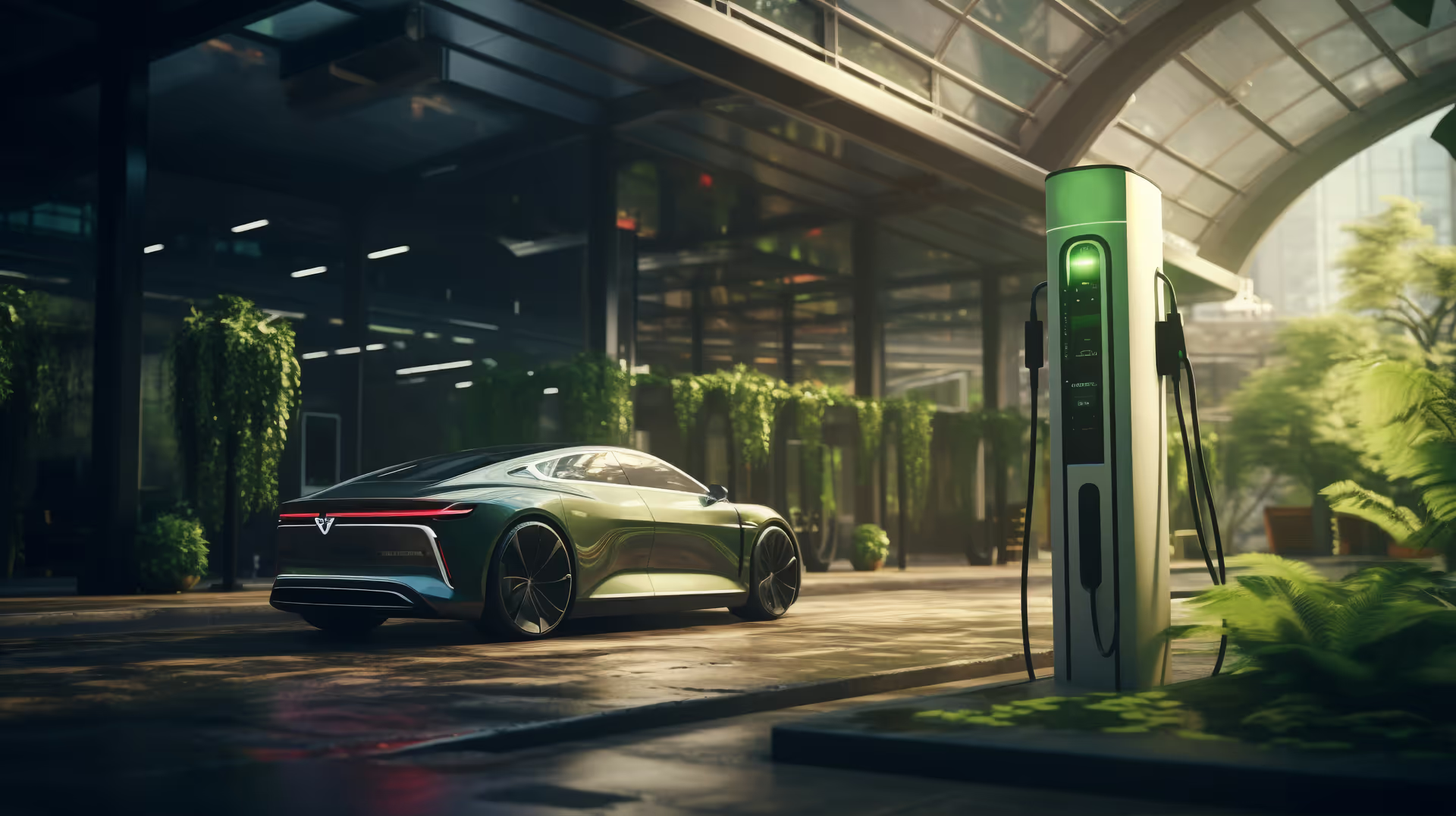
Everything You Need to Know Before Buying an Electric Car: EV Guide for First-Time Buyers
Everything You Need to Know Before Buying an Electric Car: EV Guide for First-Time Buyers

Content
Content
Introduction: Your Journey to Electric Starts Here
The question is no longer whether electric vehicles will dominate the automotive landscape — it's when. In 2025, that future has arrived. Electric vehicles have evolved from environmental statements and technological curiosities into the most compelling automobiles available, offering performance that embarrasses supercars, operating costs that make accountants smile, and driving experiences that convert even the most devoted petrolheads.
Yet for many potential buyers, the transition to electric remains shrouded in uncertainty. How far can electric cars really go? Will I be stranded without a charging station? Can I charge at home? Is an EV really cheaper to own? What about battery degradation? These questions deserve clear, honest answers — not marketing speak or environmental guilt-trips.
This comprehensive guide cuts through the noise to deliver everything you need to make an informed decision about going electric in 2025. Whether you're a first-time EV buyer curious about the Tesla Model 3, a family seeking the perfect electric SUV, or a luxury buyer comparing the Mercedes EQS to the BMW i7, we'll examine every factor that influences the electric vehicle ownership experience.
The Bottom Line: For the majority of drivers, an electric vehicle will cost less to operate, require less maintenance, provide better performance, and deliver a more enjoyable daily driving experience than any gasoline alternative. The question isn't whether EVs are ready — it's whether you're ready to discover what you've been missing.
— Alex Johnson
The data supports this confidence. Electric vehicle sales grew 35% globally in 2024, with EVs capturing over 18% of all new car sales. In Norway, EVs represent over 90% of new registrations. China delivered more than 10 million electric vehicles. The United States saw EV adoption accelerate despite policy uncertainties. This isn't a trend — it's a transformation.
Let's explore why millions of drivers have already made the switch, and whether an electric vehicle is right for you.
Understanding Electric Vehicles — Types, Technology, and Terminology
The Electric Vehicle Spectrum
Not all electrified vehicles are created equal. Understanding the distinctions helps identify which type best suits your needs.
Battery Electric Vehicles (BEVs) run exclusively on electricity stored in large battery packs. There's no gasoline engine, no tailpipe, no oil changes. Examples include the Tesla Model Y, Ford Mustang Mach-E, Hyundai Ioniq 5, and Rivian R1T. These vehicles offer the lowest operating costs and simplest ownership experience but require access to charging infrastructure.
Plug-in Hybrid Electric Vehicles (PHEVs) combine battery packs with gasoline engines. They can drive 20-60 miles on electricity alone before the gas engine activates. Examples include the BMW X5 xDrive50e, Toyota RAV4 Prime, and Volvo XC90 Recharge. PHEVs offer flexibility for those with occasional long-distance needs but carry the complexity and maintenance requirements of two powertrains.
Hybrid Electric Vehicles (HEVs) — like the Toyota Prius — use small batteries to improve fuel efficiency but cannot plug in to charge. While more efficient than conventional vehicles, they remain fundamentally gasoline-powered and aren't covered in this guide.
Fuel Cell Electric Vehicles (FCEVs) use hydrogen to generate electricity. The Toyota Mirai and Hyundai Nexorepresent current offerings. Limited hydrogen infrastructure restricts practicality for most buyers, though the technology shows promise for commercial applications.
For this guide, we focus primarily on BEVs — true electric vehicles that represent the future of personal transportation.
Key Specifications Explained
Understanding EV specifications helps compare vehicles meaningfully.
- Battery Capacity (kWh) measures total energy storage, like a fuel tank's size. A 100 kWh battery stores significantly more energy than a 60 kWh pack, generally enabling longer range. However, efficiency matters equally — a efficient vehicle with a smaller battery may match the range of an inefficient one with a larger pack.
- Range (Miles/Kilometers) indicates how far a fully charged vehicle can travel under standardized test conditions. The EPA rating in the United States tends toward conservatism, meaning real-world range often meets or exceeds official figures. European WLTP ratings are slightly more optimistic. Real-world range varies with speed, temperature, terrain, and climate control usage.
- Charging Speed (kW) determines how quickly the battery replenishes. This is measured in kilowatts — higher numbers mean faster charging. Home charging typically delivers 7-11 kW through Level 2 equipment. DC fast charging ranges from 50 kW at older stations to 350 kW at the latest installations. A vehicle's maximum charging rate limits how quickly it can accept power regardless of station capability.
- Efficiency (Miles per kWh or Wh/Mile) measures how far the vehicle travels per unit of energy consumed. More efficient vehicles travel farther on the same battery capacity. The Lucid Air achieves approximately 5 miles per kWh, while less efficient vehicles might manage 3 miles per kWh — a significant difference over thousands of miles annually.
Pro Tip: When comparing EVs, look beyond headline range numbers. A vehicle with slightly less range but faster charging and better efficiency often provides a superior real-world experience.
— Alex Johnson
Battery Technology Basics
Understanding battery fundamentals dispels common concerns about EV battery life and degradation.
Modern EVs use lithium-ion batteries in various chemistries. NMC (Nickel Manganese Cobalt) batteries offer high energy density, enabling longer range in compact packages. LFP (Lithium Iron Phosphate) batteries sacrifice some density for improved longevity, safety, and lower cost. Many manufacturers, including Tesla, now offer both chemistries across their lineup.
Battery degradation — the gradual reduction in capacity over time — concerns many potential buyers. However, real-world data demonstrates exceptional longevity. Studies of Tesla vehicles with over 200,000 miles show average degradation of only 12% — meaning a vehicle that started with 300 miles of range would still deliver approximately 265 miles after extreme usage.
Modern battery management systems actively protect battery health by regulating charging speeds, managing thermal conditions, and preventing harmful charge states. Following manufacturer recommendations — avoiding frequent fast charging to 100% and extreme temperature exposure — maximizes longevity, though modern systems make damaging batteries through normal use difficult.
Warranty coverage provides additional peace of mind. Federal regulations require 8-year/100,000-mile battery warranties on all EVs sold in the United States. Many manufacturers exceed these minimums, and some — like Hyundai with its 10-year/100,000-mile coverage — offer industry-leading protection.
The True Cost of Electric Vehicle Ownership
Purchase Price: Closing the Gap
The days when electric vehicles cost dramatically more than gasoline equivalents are ending. While EV purchase pricesremain slightly higher on average, the gap has narrowed substantially, and several affordable options now exist.
Entry-level electric vehicles start under $30,000 after incentives:
- The Chevrolet Equinox EV starts at approximately $35,000, with the LT trim offering 319 miles of range — exceptional value in the mainstream crossover segment.
- The Tesla Model 3 starts at approximately $39,000, delivering 272 miles of range with access to the extensive Supercharger network.
- The Hyundai Ioniq 6 starts around $38,000, offering over 360 miles of range in an aerodynamic sedan package — the longest range per dollar in the market.
- The Nissan Ariya begins near $40,000 with competitive specifications and Nissan's established dealer network.
Mid-range electric vehicles between $45,000-65,000 offer compelling packages:
- The Tesla Model Y remains the world's best-selling vehicle — gasoline or electric — with pricing starting around $45,000 for the Long Range variant.
- The Ford Mustang Mach-E offers distinctive styling and Ford's dealer network, starting around $43,000.
- The Hyundai Ioniq 5 and Kia EV6 share a platform offering 800-volt architecture enabling ultra-fast charging, with prices starting near $45,000.
- The Volkswagen ID.4 provides German engineering at accessible prices, starting around $40,000.
Premium electric vehicles above $65,000 deliver luxury and performance:
- The BMW i4 and i5 bring driving dynamics to electric sedans, starting around $53,000 and $67,000 respectively.
- The Mercedes-Benz EQE offers S-Class-level technology in a more accessible package, starting near $75,000.
- The Porsche Taycan proves electric vehicles can be true sports cars, starting around $95,000.
- The Tesla Model S and Model X deliver exceptional performance with prices starting near $80,000.
Federal and State Incentives
EV tax credits significantly reduce effective purchase prices for qualifying buyers.
The federal Clean Vehicle Credit provides up to $7,500 for new electric vehicles meeting domestic manufacturing requirements. Income limits apply — $150,000 for single filers, $300,000 for joint filers — and vehicle MSRP caps of $55,000 for sedans and $80,000 for SUVs and trucks restrict eligibility.
Used EV credits of up to $4,000 apply to qualifying pre-owned electric vehicles priced under $25,000, making electric vehicle ownership accessible to broader demographics.
State incentives vary significantly. California offers up to $7,500 through the Clean Vehicle Rebate Project. Colorado provides $5,000 tax credits. New York, Massachusetts, and numerous other states offer meaningful incentives. Some states provide additional benefits including HOV lane access, reduced registration fees, and utility rebates.
[content]
Dealer credits became available in 2024, allowing qualifying buyers to receive tax credits as point-of-sale reductions rather than waiting for tax filing. This dramatically improves accessibility for buyers who might not have sufficient tax liability to claim full credits.
Financial Reality: A $45,000 EV with $7,500 federal credit and $2,000 state incentives has an effective price of $35,500 — often comparable to gasoline alternatives before considering operating savings.
— Alex Johnson
Operating Cost Advantages
The financial case for electric vehicles extends far beyond purchase price. Operating cost savings accumulate throughout ownership, often totaling $10,000 or more over typical ownership periods.
Fuel costs represent the most significant saving. At national average electricity rates of approximately $0.14/kWh, driving 12,000 annual miles in an efficient EV costs roughly $500-600 in electricity. The same mileage in a 30 MPG gasoline vehicle at $3.50/gallon costs over $1,400. Annual fuel savings exceed $800 for average drivers — more for those with higher mileage or access to cheap electricity.
Home charging economics improve further for many owners. Time-of-use electricity rates in many areas drop to $0.08-0.10/kWh during overnight hours, reducing annual fueling costs below $400. Those with solar panels can charge for effectively zero marginal cost once the system is paid off.
Maintenance costs favor electric vehicles substantially. EVs have no oil changes, no transmission fluid, no spark plugs, no timing belts, no exhaust systems. Brake pads last dramatically longer due to regenerative braking — many EV owners never replace brake pads during ownership.
Consumer Reports estimates EV maintenance costs at 50% less than gasoline vehicles over vehicle lifetime. This translates to thousands of dollars in savings while eliminating time spent at service departments.
Insurance costs vary by vehicle and location but are increasingly competitive. While EVs historically commanded premium rates, expanding options and improving repair infrastructure have normalized costs. Shopping among insurers often reveals competitive rates for electric vehicles.
Total Cost of Ownership Analysis
| Segment | Price Range | Models |
| Premium Luxury | $93,000 – $185,000 | BMW 7 Series, Mercedes-Maybach S 680 |
| Ultra Luxury | $215,000 – $350,000 | Bentley Flying Spur, Rolls-Royce Ghost |
| Ultimate Luxury | $400,000+ | Rolls-Royce Ghost Extended |
Full pricing summary table:
| Vehicle | Starting Price | Top Variant | Monthly Lease |
| Mercedes-Maybach S 680 | $185,000 | — | $2,200 – $2,800 |
| BMW 740i | $93,000 | — | — |
| BMW i7 M70 xDrive | — | $179,000 | $1,400 – $1,800 |
| Rolls-Royce Ghost | $350,000+ | — | — |
| Rolls-Royce Ghost Extended | $400,000+ | — | — |
| Bentley Flying Spur Azure (V8) | $215,000 | — | $2,800 – $3,500 |
| Bentley Flying Spur Mulliner (W12) | — | $250,000+ | — |
Combining purchase price, incentives, operating costs, and resale value provides true total cost of ownershipcomparison.
Example comparison — compact SUV segment:
A Chevrolet Equinox EV with $35,000 MSRP, $7,500 federal credit, 60,000 miles over 5 years:
- Effective purchase: $27,500
- Fuel cost (electricity): $2,500
- Maintenance: $1,500
- Total 5-year cost: $31,500
A comparable gasoline SUV with $32,000 MSRP, same usage:
- Purchase: $32,000
- Fuel cost (gasoline): $7,000
- Maintenance: $3,500
- Total 5-year cost: $42,500
The EV saves approximately $11,000 over five years despite higher initial price — a compelling financial argument before considering environmental benefits or driving experience improvements.
Charging Demystified — Home, Work, and Road
Home Charging: The Foundation
Home charging transforms the EV ownership experience. Rather than visiting gas stations, your vehicle charges overnight while you sleep — departing each morning with a "full tank."
Level 1 charging uses standard 120-volt household outlets. While convenient as backup, Level 1 delivers only 3-5 miles of range per hour of charging — insufficient for most daily driving without extended charging windows. Consider Level 1 a temporary solution rather than permanent infrastructure.
Level 2 charging uses 240-volt circuits (like those powering electric dryers) to deliver 25-40 miles of range per hour. An 8-hour overnight charge adds 200-320 miles — more than sufficient for virtually any daily driving pattern. Level 2 represents the optimal home charging solution.
Home charging equipment ranges from simple to sophisticated:
Basic portable EVSE units cost $300-500 and plug into existing 240-volt outlets. These work well for garages with appropriate outlets already installed.
Hardwired charging stations cost $400-700 plus installation, offering convenience features like cable management and smartphone connectivity. Popular options include ChargePoint Home Flex, Grizzl-E, and JuiceBox.
Tesla Wall Connector serves Tesla vehicles specifically, providing up to 48 amps (11.5 kW) of charging power with elegant design.
Installation costs vary based on electrical panel capacity and distance from panel to charging location. Typical installations range from $500-1,500 for straightforward situations, though older homes requiring panel upgrades may incur higher costs. Many utilities offer rebates offsetting installation expenses.
Charging Strategy: Most EV owners charge at home 80-90% of the time. Setting departure time and charging limits in vehicle software ensures the car is ready each morning without unnecessary charging to 100% — which can marginally reduce battery longevity in some vehicles.
— Alex Johnson
Workplace and Destination Charging
Workplace charging expands charging opportunities for those without home charging or with longer commutes.
Employers increasingly offer charging as an employee benefit. Even slow Level 2 charging during an 8-hour workday can add 150-250 miles — effectively unlimited range for most commutes. Check with employers about installing charging infrastructure; many are eager to support sustainable transportation.
Destination charging at hotels, restaurants, shopping centers, and parking facilities continues expanding. Apps like PlugShare and ChargePoint map available stations. Planning trips to include charging-equipped destinations — charging while dining or shopping — optimizes time efficiency.
Tesla Destination Chargers populate hotels and resorts globally, providing convenient overnight charging for Tesla owners. The network's integration with Tesla navigation simplifies trip planning.
DC Fast Charging: Road Trip Ready
DC fast charging enables long-distance travel by adding substantial range in minutes rather than hours. Understanding this infrastructure is essential for road trip planning.
Charging networks have expanded dramatically:
Tesla Supercharger remains the gold standard — over 50,000 connectors globally with 99%+ uptime reliability. The network now supports non-Tesla vehicles through NACS adapters or built-in NACS ports on newer models. Pricing averages $0.25-0.40/kWh depending on location.
Electrify America operates the largest non-Tesla network in North America with over 900 stations offering up to 350 kW charging. The network has improved reliability substantially since early struggles, though still trails Tesla.
EVgo, ChargePoint, and IONITY (Europe) provide additional fast charging options with varying coverage and pricing.
Charging speeds depend on both station capability and vehicle acceptance rate:
| Vehicle | Max Charging Rate | 10-80% Time |
| Hyundai Ioniq 5 | 235 kW | 18 minutes |
| Kia EV6 | 235 kW | 18 minutes |
| Porsche Taycan | 270 kW | 22 minutes |
| Tesla Model 3 LR | 250 kW | 25 minutes |
| Ford Mustang Mach-E | 150 kW | 38 minutes |
800-volt architecture in vehicles like the Hyundai Ioniq 5, Kia EV6, and Porsche Taycan enables the fastest charging speeds. These vehicles can add 200 miles of range in under 20 minutes at capable stations — approaching the convenience of gasoline refueling.
Planning Electric Road Trips
Electric road trips require modest additional planning but enable adventures that many find more enjoyable than gasoline equivalents.
Built-in navigation in most EVs automatically routes through charging stations, calculating optimal stops based on current charge, destination, and desired arrival charge level. Tesla's navigation and A Better Route Planner app excel at this planning.
Typical road trip rhythm involves driving 150-200 miles, stopping for 15-25 minutes to charge while stretching, using restrooms, and grabbing refreshments. Many EV owners find this pace more pleasant than the marathon drives gasoline vehicles enable — arriving refreshed rather than exhausted.
Charging while dining transforms meal stops into productive charging sessions. Apps identify restaurants near fast chargers, enabling 45-minute charging sessions during sit-down meals that add 150-250 miles without dedicated charging time.
Hotel charging overnight means departing with full range each morning. Many hotels offer complimentary charging to guests, while Tesla's Destination Charger network ensures coverage at popular accommodations.
Road Trip Reality: A San Francisco to Los Angeles trip (380 miles) in a long-range EV requires one 20-minute charging stop — barely more than the restroom and coffee break most drivers need regardless of vehicle type. Transcontinental trips require more stops but remain entirely practical.
— Alex Johnson
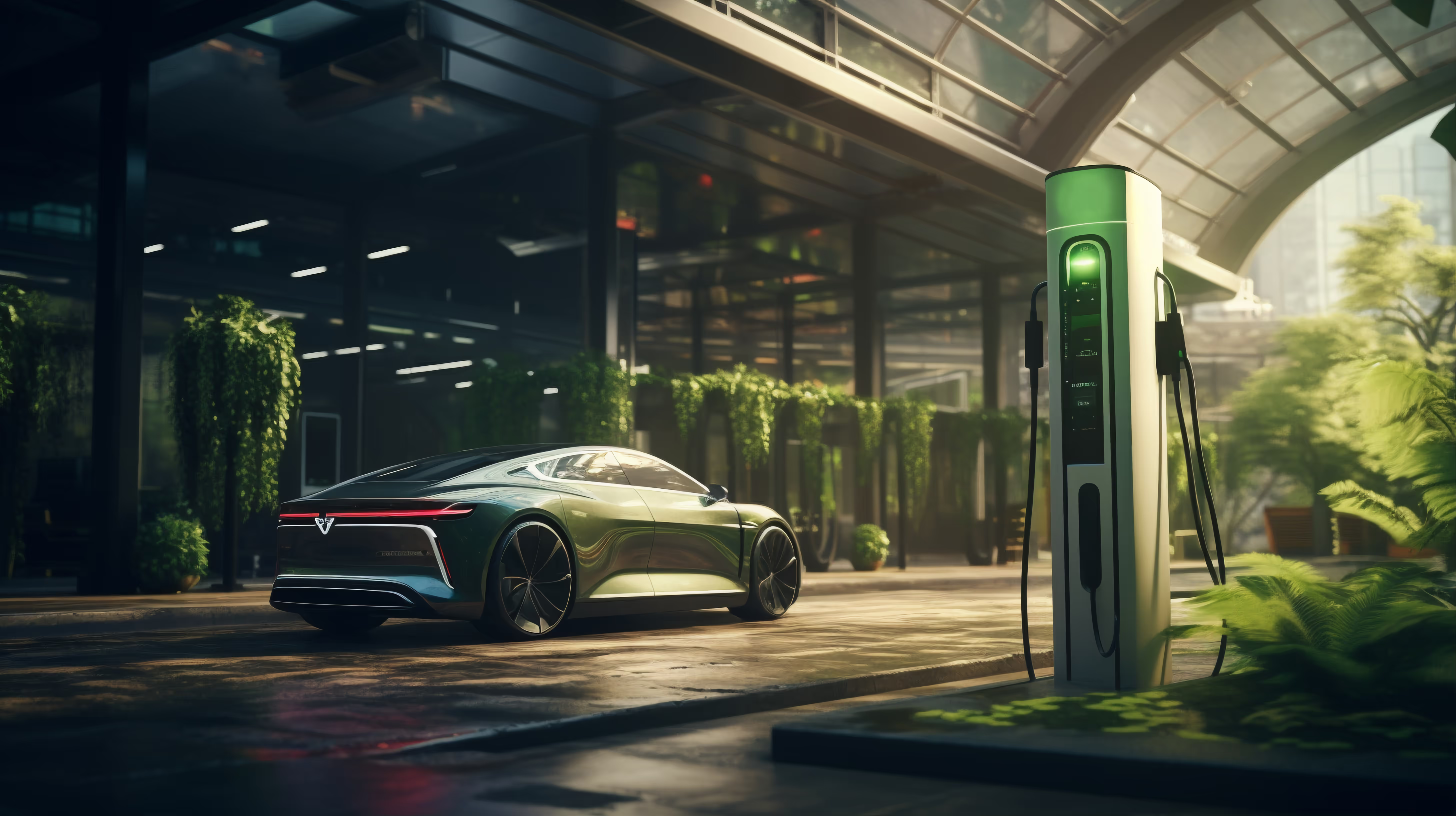
Author: Alex Johnson;
Source: edmmnatsakanyan.com
Best Electric Vehicles by Category — 2025 Buyer's Guide
Best Electric Sedans
The refreshed 2024+ Model 3 (codenamed "Highland") features improved interior quality, extended range, and refined styling. The Long Range variant delivers 341 miles of range with access to Tesla's unparalleled Supercharger network. Starting around $42,000, it represents exceptional value in the electric sedan segment.
Why choose it: Best charging network, strong residual values, continuous improvement through software updates, proven reliability.
The Ioniq 6's 800-volt architecture provides 10-80% charging in just 18 minutes at capable stations. Interior space impresses, with rear seat accommodations rivaling larger vehicles. Starting around $38,000, it offers the longest range per dollar in the market.
Why choose it: Maximum range, fastest charging speeds, distinctive design, strong value proposition.
The i4 M50 produces 536 horsepower, accelerating to 60 mph in 3.7 seconds while maintaining the composed handling BMW is known for. Range of approximately 270 miles suffices for most use patterns. Starting around $53,000, it targets drivers unwilling to sacrifice engagement for efficiency.
Why choose it: Best driving dynamics in class, premium brand prestige, strong dealer network.
Best Electric SUVs
With 310 miles of range, access to the Supercharger network, standard all-wheel drive, and Tesla's minimalist but functional interior, the Model Y satisfies most buyers' requirements. The optional third row expands versatility for occasional seven-passenger needs. Starting around $45,000, competition struggles to match the value proposition.
Why choose it: Best-selling EV globally, unmatched charging network, strong resale value, proven reliability.
Beyond distinctive design, the Ioniq 5 delivers practical excellence: 303 miles of range, 800-volt architecture enabling fastest-in-class charging, and an interior featuring truly flat floors and innovative features like Vehicle-to-Load (V2L) capability that can power external devices. Starting around $45,000.
Why choose it: Fastest charging, distinctive design, innovative features, excellent interior space.
The EV6 GT variant produces 576 horsepower, accelerating to 60 mph in 3.4 seconds — performance territory typically requiring vehicles costing twice as much. Even standard variants offer engaging dynamics unusual in the crossover segment. Starting around $43,000 for standard variants.
Why choose it: Sports car performance available, aggressive styling, same excellent charging capability as Ioniq 5.
The Mach-E offers up to 312 miles of range and distinctive design clearly inspired by — but not derivative of — the iconic Mustang. The GT Performance variant delivers 480 horsepower and genuinely entertaining handling. Ford's BlueCruise hands-free highway driving and extensive dealer network appeal to mainstream buyers. Starting around $43,000.
Why choose it: Ford brand trust, extensive dealer network, available performance, hands-free driving capability.
Best Three-Row Electric SUVs
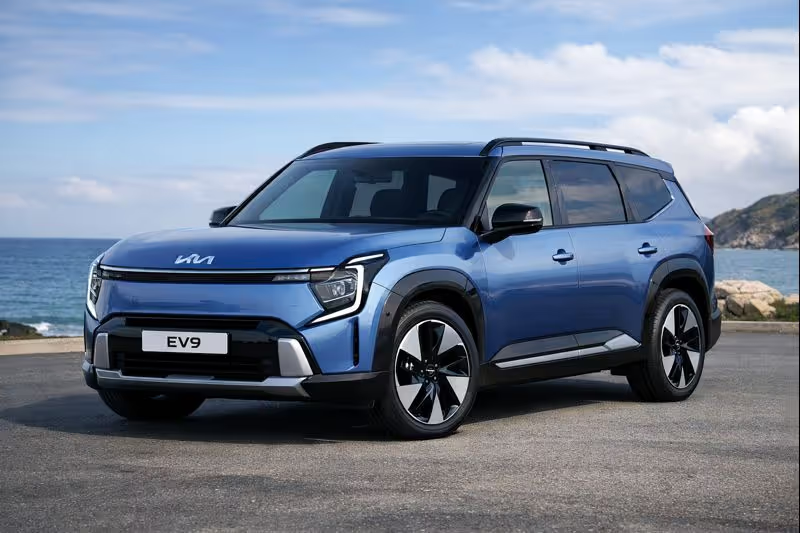
Unlike most three-row "SUVs" that require contortion to access cramped rear seats, the EV9's 122-inch wheelbase creates legitimate space for all passengers. Range of 304 miles, 800-volt fast charging, and distinctive design complete an impressive package. Starting around $55,000.
Why choose it: Best third-row space in any EV, distinctive design, excellent charging speed, reasonable price for category.
Author: Alex Johnson;
Source: edmmnatsakanyan.com
The R1S delivers 321 miles of range with available quad-motor setup providing 835 horsepower and sophisticated torque vectoring. Standard air suspension adjusts for various terrains. Interior quality and technology exceed expectations for a young brand. Starting around $76,000.
Why choose it: Best off-road capability, adventure-oriented features, startup innovation, strong brand identity.
The EQS SUV's 305-mile range and available Hyperscreen dashboard showcase Mercedes' technological capabilities. Rear passengers enjoy genuine comfort, and the brand's prestige appeals to luxury buyers. Starting around $105,000.
Why choose it: Ultimate luxury, flagship technology, Mercedes brand prestige.
Best Electric Trucks
The Lightning delivers 320 miles of range in Extended Range configuration, 775 lb-ft of torque for towing, and innovative features like the Mega Power Frunk — a massive front trunk that can power tools, tailgate parties, or even homes during outages through Ford Intelligent Backup Power.
Pro Work capability with 10,000-pound towing demonstrates the Lightning handles genuine truck duties. Starting around $50,000 (Pro base model), though better-equipped variants start higher.
Why choose it: Proven truck capability, innovative features, Ford truck heritage, extensive dealer network.
The R1T's 400+ horsepower, 835 horsepower in quad-motor configuration, handles varied terrain effortlessly. The innovative Gear Tunnel — a pass-through storage compartment behind the cab — provides unique utility. Range of 328 miles and sophisticated technology complete the package. Starting around $71,000.
Why choose it: Best off-road capability, innovative design, adventure-focused features, quad-motor performance.
Love or hate the stainless steel design, the Cybertruck's specifications impress: 340+ miles of range, claimed 11,000-pound towing capacity, and acceleration that embarrasses sports cars. The distinctive appearance ensures maximum attention — positive or negative. Starting around $80,000 for Dual Motor variant.
Why choose it: Unmatched performance specifications, distinctive design, Tesla ecosystem integration.
Best Luxury Electric Vehicles
The EQS's 56-inch Hyperscreen spanning the dashboard showcases technological ambition. Range exceeding 350 miles eliminates anxiety, while ride quality and cabin isolation demonstrate Mercedes' luxury expertise. Starting around $105,000.
Why choose it: Ultimate luxury refinement, impressive range, flagship technology.
The Theatre Screen descending for rear passengers transforms the cabin. The i7 M70 variant delivers 650 horsepower for genuinely exciting performance when the owner takes the wheel. Starting around $106,000.
Why choose it: Best combination of rear-seat luxury and driving dynamics.
The Air's 516-mile range leads the industry, while the Sapphire variant's 1,234 horsepower makes it the most powerful sedan ever produced. Interior quality and space efficiency impress, with more interior volume than the Mercedes S-Class in a smaller exterior footprint. Starting around $70,000 for Pure variant.
Why choose it: Industry-leading range, remarkable performance, American luxury alternative.
Common Concerns Addressed — Honest Answers to Real Questions
Range Anxiety: Reality vs. Perception
Range anxiety — the fear of running out of charge — represents the most common concern among prospective EV buyers. Addressing it honestly requires examining actual driving patterns.
Average daily driving in the United States is approximately 37 miles. Even entry-level EVs with 200+ miles of range cover 5-6 average days of driving on a single charge. For 95%+ of days, any modern EV provides more range than needed.
Home charging transforms the equation entirely. Waking each morning with a full "tank" means range anxiety only matters for occasional long trips — not daily driving. The gasoline model of depleting then refueling inverts to a constant state of near-full charge.
Charging infrastructure has expanded dramatically. The United States now has over 60,000 public charging stations with 180,000+ individual plugs. The Tesla Supercharger network alone exceeds 20,000 domestic connectors. Cross-country electric travel is routine, not adventurous.
Buffer and planning eliminate remaining concerns. Modern EVs warn well before charge depletion, and navigation systems route through charging stations automatically. Running out of charge requires ignoring multiple warnings and available charging options — equivalent to running out of gas while passing multiple stations.
Perspective Shift: After a few weeks of EV ownership, most drivers report range anxiety disappearing entirely. The convenience of home charging — never visiting gas stations for daily driving — outweighs occasional trip planning requirements.
— Alex Johnson
Cold Weather Performance
Cold weather does impact EV range — this is physics, not a flaw. Honest assessment helps set appropriate expectations.
Range reduction in cold weather typically measures 20-30% in extreme conditions. A 300-mile EV might deliver 210-240 miles in frigid temperatures. This reduction results from:
- Battery chemistry operating less efficiently at low temperatures
- Cabin heating consuming energy (gasoline vehicles use waste engine heat)
- Increased rolling resistance from cold tires and denser air
Preconditioning mitigates these impacts substantially. Most EVs can warm the battery and cabin while plugged in, using grid power rather than stored battery energy. Departing with a warm battery and cabin dramatically improves efficiency and range.
Heat pumps in modern EVs (standard on Tesla Model 3/Y, Hyundai/Kia EVs, and most premium offerings) provide cabin heating far more efficiently than resistive heaters. Vehicles with heat pumps experience less range degradation than those without.
Real-world experience demonstrates EVs work well in cold climates. Norway — where winter temperatures plunge far below those in most U.S. regions — has the world's highest EV adoption rate. If EVs work in Norway, they work anywhere.
Battery Degradation and Longevity
Battery life concerns stem from smartphone experience, where batteries degrade noticeably within 2-3 years. Automotive batteries differ fundamentally.
Scale and thermal management explain the difference. EV batteries contain vastly more cells than smartphones, distributing charge cycles across more capacity. Sophisticated thermal management systems maintain optimal operating temperatures, preventing the heat-induced degradation plaguing phones.
Real-world data provides reassurance. Studies of Tesla vehicles approaching 200,000 miles show average degradation of approximately 12%. A vehicle delivering 300 miles when new still provides 265 miles — entirely adequate for most use patterns.
Warranty protection covers unexpected degradation. Federal regulations mandate 8-year/100,000-mile battery warranties. Tesla covers 70% capacity retention; Hyundai extends coverage to 10 years. Degradation severe enough to trigger warranty claims is exceptionally rare.
Battery replacement costs have declined dramatically — from over $30,000 a decade ago to $10,000-15,000 today, with continued decreases expected. However, most owners never need replacement; batteries typically outlast vehicle useful life.
Charging Without a Garage
Apartment dwellers and those without home charging face genuine challenges — but increasingly viable solutions exist.
Workplace charging serves many urban dwellers effectively. Employers increasingly install charging infrastructure as sustainability initiatives. Charging during work hours provides daily range replenishment without home equipment.
Public Level 2 charging at shopping centers, parking garages, and streetside locations enables "destination charging" integrated with daily activities. An hour of shopping provides 25-40 miles of range — sufficient for many daily patterns.
DC fast charging can substitute for home charging when necessary. A 20-minute weekly fast charge session provides 150-200 miles — enough for typical weekly driving. Costs exceed home charging but remain below gasoline.
Expanding infrastructure continues addressing urban charging needs. Cities increasingly mandate charging in new construction and retrofit existing parking. Curbside charging poles proliferate in dense urban areas.
Honest Assessment: Home charging provides optimal EV ownership experience. Those without it face additional planning and costs. However, urban dwellers with workplace charging or convenient public options successfully own EVs. Evaluate your specific situation honestly before deciding.
— Alex Johnson
Towing and Heavy Use
Towing capability requires nuanced understanding. EVs can tow — sometimes impressively — but range impacts must be considered.
Towing capacity in electric trucks matches or exceeds gasoline equivalents:
- Ford F-150 Lightning: 10,000 lbs
- Rivian R1T: 11,000 lbs
- Tesla Cybertruck: 11,000 lbs (claimed)
Range while towing decreases substantially — typically 40-50% reduction depending on trailer size, weight, and speed. A 300-mile EV might deliver 150-180 miles while towing.
Practical implications vary by use case. Weekend trips towing boats or campers 100-200 miles remain entirely practical with a charging stop. Professional contractors towing heavy equipment hundreds of miles daily might find current EVs challenging.
Improving infrastructure helps. The Tesla Supercharger network increasingly accommodates pull-through charging for vehicles with trailers. Route planning apps now calculate range impacts for specific trailer weights.
The Environmental Equation — Lifecycle Analysis
Manufacturing Footprint
Honest environmental assessment requires examining the complete vehicle lifecycle — not merely tailpipe emissions.
Battery manufacturing does create significant carbon emissions. Mining raw materials, refining them, and assembling cells requires substantial energy. A typical EV battery generates 8-16 tons of CO2 during production — roughly equivalent to manufacturing an entire gasoline vehicle.
Context matters critically. This "carbon debt" is repaid through cleaner operation over the vehicle's lifetime. The break-even point depends on grid electricity mix:
- Clean grids (hydro, nuclear, renewables): 6-12 months
- Average U.S. grid: 18-24 months
- Coal-heavy grids: 36-48 months
Most EVs deliver lifetime emissions 50-70% lower than gasoline equivalents even accounting for battery manufacturing. As grids continue cleaning and battery production efficiency improves, this advantage grows.
Operational Emissions
Electric vehicle emissions during operation depend entirely on electricity generation mix.
Grid composition varies dramatically by region. California's grid — heavy in solar and hydroelectric — makes EV operation nearly emissions-free. West Virginia's coal-dependent grid means EVs produce more operational emissions (though still less than gasoline vehicles).
Grid cleaning continues rapidly. The U.S. grid has reduced carbon intensity approximately 40% since 2005. Renewable energy now provides over 20% of generation, with projections exceeding 40% by 2030. Every year, existing EVs become cleaner as grids improve.
Home solar enables genuinely zero-emission driving. Owners generating more solar than household consumption can effectively power vehicles entirely from renewable sources, achieving the environmental ideal.
Battery Recycling and Second Life
Battery end-of-life represents both challenge and opportunity.
Second-life applications extend battery usefulness beyond automotive service. Batteries degraded below automotive requirements (typically 70-80% capacity) remain viable for stationary storage. Nissan, BMW, and others operate programs repurposing vehicle batteries for grid storage and backup power.
Recycling technology has matured substantially. Companies like Redwood Materials (founded by Tesla's former CTO) achieve 95%+ recovery of valuable materials including lithium, cobalt, nickel, and copper. These recovered materials re-enter battery production, creating increasingly circular supply chains.
Economic incentives drive recycling investment. Rising raw material prices make battery recycling increasingly profitable. Regulations requiring manufacturer responsibility ensure recycling infrastructure continues expanding.
Environmental Bottom Line: Electric vehicles significantly reduce transportation emissions regardless of grid mix, with advantages growing as grids clean. Manufacturing impacts are real but repaid quickly through cleaner operation. End-of-life processes continue improving.
— Alex Johnson
Making the Decision — Is an EV Right for You?
Ideal EV Candidates
Electric vehicles excel for certain use patterns and priorities:
Daily commuters with predictable driving patterns benefit most from EVs. Home charging overnight provides a "full tank" every morning without gas station visits. Lower operating costs compound over years of commuting.
Multi-vehicle households often find EVs ideal for one vehicle even if another gasoline vehicle handles occasional long trips or towing. Using the EV for daily driving while keeping a gasoline vehicle for specific needs captures most benefits.
Environmentally conscious buyers achieve meaningful emissions reductions through EV adoption. While not zero-impact, EVs substantially outperform gasoline alternatives on lifecycle emissions.
Technology enthusiasts appreciate EVs' software-driven nature. Over-the-air updates, smartphone integration, and continuous improvement appeal to those comfortable with technology.
Performance seekers discover instant electric torque provides acceleration exceeding vehicles costing far more. Many performance EVs outrun supercars while transporting families and groceries.
Situations Requiring Careful Consideration
Some circumstances warrant careful evaluation before committing to electric:
No home charging access significantly impacts EV convenience. While possible without it, the ownership experience differs substantially. Evaluate workplace charging, public charging proximity, and lifestyle compatibility honestly.
Frequent long-distance travel with time constraints may frustrate. While cross-country EV travel is routine, those frequently driving 500+ mile days may find gasoline's faster refueling advantageous.
Towing heavy loads regularly remains challenging with current EVs. Occasional trailer towing works well; daily heavy towing less so.
Limited budgets face genuine tradeoffs. While total ownership costs often favor EVs, higher purchase prices may strain initial budgets. Used EVs offer an increasingly attractive path to electric ownership at reduced prices.
Remote areas with limited charging infrastructure require additional planning. Most populated areas have sufficient coverage, but truly rural regions may lack convenient charging options.
Test Drive Recommendations
Extended test drives reveal EV ownership reality better than brief dealership loops.
Request overnight loans when possible. Living with an EV for a day or weekend — experiencing home charging, typical driving, and system integration — provides insight that brief drives cannot.
Test charging infrastructure during evaluations. Visit fast charging stations along routes you travel. Experience the apps, payment systems, and wait times yourself.
Compare multiple EVs before deciding. Different brands emphasize different priorities — driving dynamics, interior space, technology integration, charging speed. Testing several clarifies personal preferences.
Include passengers in evaluations. Family members' comfort and preferences matter equally. Rear seat accommodations, cargo space, and back seat technology access vary significantly between models.
The Future of Electric Mobility — What's Coming Next
Technology Developments
Electric vehicle technology continues advancing rapidly, making future models increasingly compelling.
Battery energy density improvements of 5-7% annually translate to either longer range or smaller, lighter battery packs achieving current range. Solid-state batteries — promising 50%+ density improvements — could reach production within five years.
Charging speed continues increasing. 350 kW charging is now standard infrastructure; 500 kW chargers are in testing. Future EVs may add 300 miles in 10 minutes, effectively matching gasoline refueling convenience.
Vehicle-to-grid (V2G) capability will transform EVs into mobile power storage. During peak demand, vehicles can return electricity to the grid, earning owners revenue while stabilizing electrical systems.
Autonomous driving development continues, with EVs ideally suited for integration. Their drive-by-wire systems and software-centric architectures facilitate autonomous features. Full autonomy remains years away, but incremental capabilities improve continuously.
Market Evolution
Industry transformation accelerates toward electric dominance.
Legacy automaker commitment has reached irreversible levels. General Motors, Ford, Volkswagen, Mercedes-Benz, and BMW have invested billions in electric platforms and announced internal combustion phase-out dates. This isn't hedging — it's strategic transformation.
Chinese competition will reshape global markets. BYD, Nio, and others produce compelling EVs at aggressive price points. Their entry into Western markets will drive competition and price reductions benefiting all consumers.
Charging infrastructure investment continues massive expansion. The federal government committed $7.5 billion to charging deployment. Private investment exceeds government spending. Coverage concerns will fade as networks densify.
Used EV market emergence makes electric vehicles accessible to broader demographics. Three-year-old EVs with substantial remaining battery life offer compelling value, dramatically expanding potential ownership.
Ownership Model Changes
How we own and use vehicles is evolving alongside technology.
Subscription services offer flexibility without long-term commitment. Brands including Volvo, BMW, and Porsche offer all-inclusive subscriptions that include insurance, maintenance, and charging.
Fleet electrification will accelerate adoption. Rental fleets, delivery vehicles, and corporate cars transitioning to electric expose more drivers to the technology, building familiarity and comfort.
Mobility-as-a-Service integration places EVs at the center of broader transportation ecosystems. Autonomous electric vehicles will eventually provide on-demand transportation, potentially reducing the need for personal vehicle ownership entirely.
Frequently Asked Questions
How long does it take to charge an electric car?
Home Level 2 charging adds 25-40 miles per hour — overnight charging fully replenishes most EVs. DC fast charging adds 150-250 miles in 20-30 minutes. Daily charging takes seconds (plugging in) with actual charging happening while you sleep.
How much does it cost to charge an electric car?
Home charging costs approximately $0.03-0.05 per mile at average electricity rates. Driving 12,000 annual miles costs $360-600 in electricity — roughly one-third the cost of gasoline for equivalent distance.
How far can electric cars go on one charge?
Modern EVs range from 200 to over 500 miles per charge. Most new EVs offer 250-350 miles — sufficient for a week of typical driving or a substantial road trip leg between charges.
Do electric cars work in cold weather?
Yes, though range decreases 20-30% in extreme cold. Preconditioning while plugged in, heat pump equipped models, and understanding limitations enable successful cold-climate ownership. Norway's world-leading EV adoption proves cold-weather viability.
How long do EV batteries last?
Studies show average degradation of approximately 12% after 200,000 miles. Most batteries will outlast the vehicle's useful life. Warranties covering 8-10 years/100,000 miles provide additional protection.
Should I buy or lease an electric car?
Leasing offers protection against technology obsolescence and depreciation uncertainty. Buying maximizes long-term value for those keeping vehicles 7+ years. Consider your typical ownership patterns and comfort with technology evolution.
Can I install a home charger in a rental property?
This requires landlord approval and typically tenant-funded installation. Some jurisdictions have "right to charge" laws facilitating tenant installations. Discuss with landlords before signing leases if home charging is essential.
Are electric cars really better for the environment?
Yes. Lifecycle analyses consistently show EVs producing 50-70% fewer emissions than gasoline equivalents, even accounting for battery manufacturing and grid electricity mix. Advantages grow as grids clean.
Conclusion: The Electric Future Is Now
The transition to electric mobility isn't a future event to anticipate — it's a present reality to embrace. Electric vehicleshave matured beyond early-adopter curiosities into the most compelling automobiles available, offering combinations of performance, economy, convenience, and environmental responsibility that gasoline vehicles simply cannot match.
The numbers tell the story: millions of satisfied owners, expanding infrastructure, falling costs, improving technology. The questions that once gave pause — range, charging, reliability — now have clear, positive answers supported by years of real-world experience.
For most drivers, the question is no longer whether to go electric, but when — and which electric vehicle best fits their needs. Whether you're drawn to the Tesla Model Y's proven excellence, the Hyundai Ioniq 5's rapid charging capability, the Ford F-150 Lightning's working truck credentials, or the Mercedes EQS's ultimate luxury, exceptional options exist across every segment and budget.
The benefits begin immediately upon purchase: lower fueling costs, reduced maintenance, instant performance, whisper-quiet operation, and the satisfaction of participating in transportation's sustainable future. Within weeks, most owners can't imagine returning to gasoline — the convenience of home charging and the joy of electric driving become the new normal.
Your journey to electric begins with a single decision. Test drive the vehicles that interest you, evaluate your driving patterns honestly, and take the leap when ready. Millions have made this transition and discovered something better than they imagined. The road ahead is electric — and it's ready for you.
— Alex Johnson
About the Author: The Drive Smart Editorial Team comprises automotive journalists, technology analysts, and sustainability experts dedicated to helping readers navigate the electric vehicle revolution with confidence and insight.
Related Stories
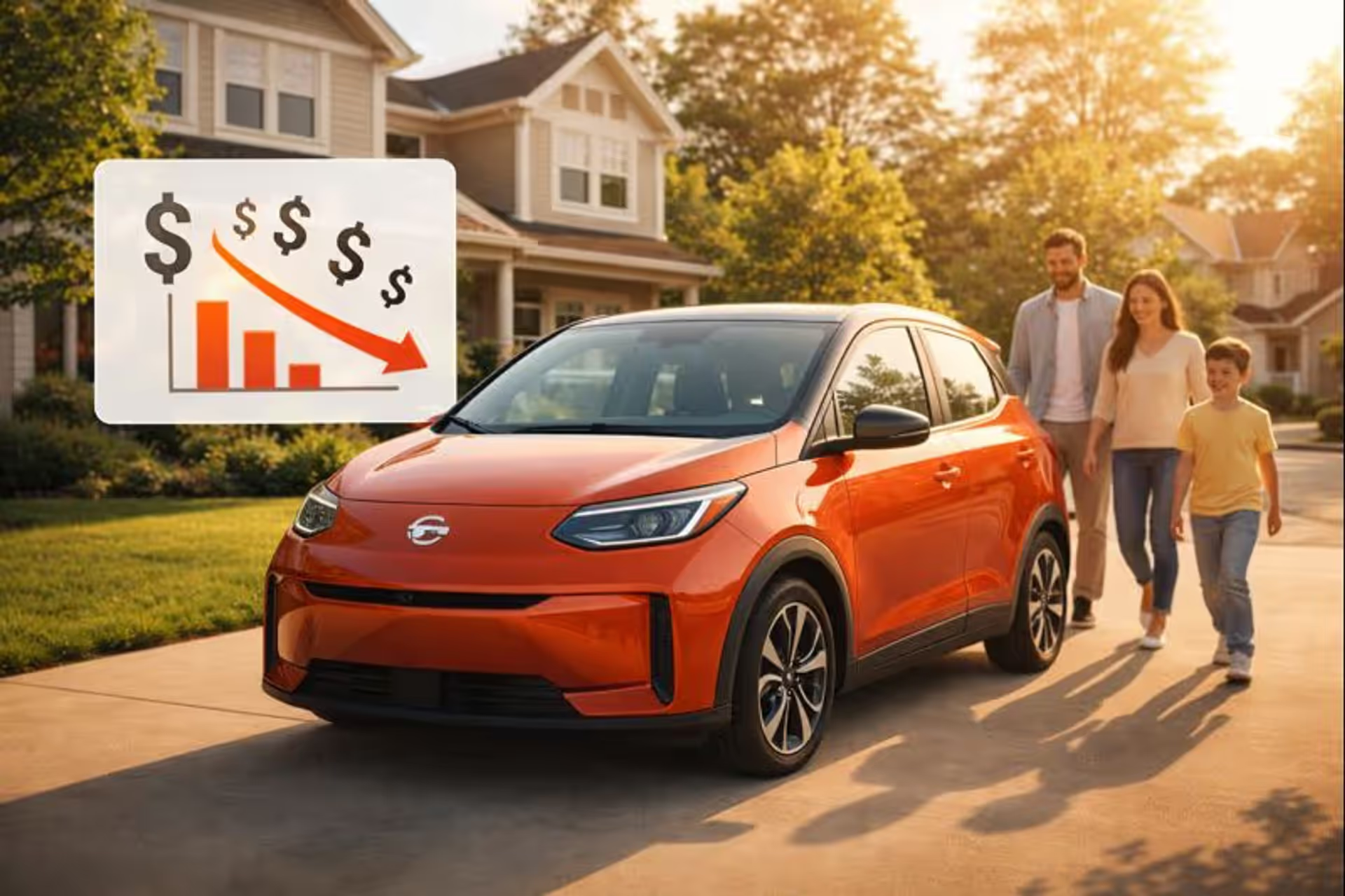
Read more



Content on edmmnatsakanyan.com is provided for general informational and educational purposes only. It is not intended to be, and should not be construed as, professional automotive, financial, leasing, or technical advice, nor as a substitute for consultation with qualified professionals.
The information provided on this website is for general informational purposes only and may include content related to cars, luxury vehicle leasing, automotive innovations, electric vehicles, and future mobility technologies. Use of this website does not create a professional, advisory, or client relationship between edmmnatsakanyan.com and the user.
Edmmnatsakanyan.com is not responsible for any errors or omissions, or for actions taken in reliance on the information contained on this website.