

Motorcycle Safety, Helmet Laws, and Your Legal Rights: What Every Rider Needs to Know After a Crash
Motorcycle Safety, Helmet Laws, and Your Legal Rights: What Every Rider Needs to Know After a Crash

Introduction: The Reality of Motorcycle Safety in 2026
Riding a motorcycle offers an exhilarating sense of freedom that few other experiences can match — the open road, the wind, the unobstructed connection with the environment that car drivers never experience. For millions of Americans, motorcycling isn't just transportation; it's a passion, a community, and a way of life. But this freedom comes with significant risks that every rider must understand and prepare for. In 2023, a record 6,335 motorcyclists were killed in crashes across the United States, the highest number since the National Highway Traffic Safety Administration began collecting data in 1975. This sobering statistic represents a 26% increase from 2019 and accounts for 15% of all traffic fatalities — despite motorcycles representing only 3% of registered vehicles on American roads.
The disparity in risk is stark and demands attention: per mile traveled, motorcyclists are nearly 28 times more likely to die in a crash than passenger car occupants and four times more likely to be injured. These numbers reflect the fundamental vulnerability of motorcycle riders — no airbags to cushion impact, no steel frame to absorb collision forces, no crumple zones engineered to protect occupants. When an accident occurs, the motorcyclist's body absorbs the impact directly, and the consequences are often severe, life-altering, or fatal. Understanding when to wear a helmet, how helmet laws affect outcomes across different states, and when to contact a motorcycle accident lawyer can mean the difference between financial ruin and fair compensation, between navigating a complex legal system alone and having an experienced motorcycle accident attorney fighting for your rights every step of the way.
This comprehensive guide examines the critical role of helmets in motorcycle safety, the current fragmented state of helmet laws across the United States, and the compelling statistics that demonstrate why protective gear saves lives. We'll explore the circumstances that demand the expertise of a motorcycle injury lawyer, what to expect from the legal process, how insurance companies work to minimize your compensation, and how to protect your rights after a crash. Whether you're a seasoned rider with decades of experience or someone considering your first motorcycle, whether you've just been injured in an accident or want to understand your options before something happens, this information is essential for protecting yourself on the road — and knowing your legal options if the worst should occur.
Motorcycle Accident Statistics 2026: Understanding the Risks
The Alarming Numbers Behind Motorcycle Crashes
According to the National Highway Traffic Safety Administration, motorcycle fatalities have nearly tripled since 1997, even as overall traffic deaths have declined due to improved vehicle safety technology. This divergence highlights a troubling reality: while cars have become dramatically safer with advanced driver assistance systems, airbags, and reinforced structures, motorcycles remain inherently vulnerable. The 6,335 motorcyclists killed in 2023 represent not just statistics but families devastated, communities affected, and preventable tragedies that continue year after year.
The factors contributing to motorcycle fatalities reveal patterns that every rider — and every motorcycle crash lawyer — understands well. Speeding is involved in 35% of all fatal motorcycle accidents, reducing the rider's ability to react and increasing the severity of impacts. Alcohol impairment accounts for 26% of motorcyclist deaths, with 1,668 riders killed in 2023 having blood alcohol concentrations of 0.08 or higher. And perhaps most preventable of all, failure to wear a helmet contributed to an estimated 2,251 motorcyclist deaths in 2021 alone — lives that could have been saved by a simple piece of safety equipment.
The demographics of motorcycle accidents have shifted significantly over the past decades. The average age of motorcycle owners has increased, with riders between 30 and 34 now accounting for 12% of all motorcycle fatalities — the highest of any age group. This shift reflects both the aging of longtime riders and the entry of new riders who may lack experience. For a motorcycle accident attorney handling these cases, understanding these demographic patterns helps in building cases and identifying the unique circumstances that led to each crash.
Why Motorcycle Accidents Are Different
Understanding why motorcycle accidents differ from car accidents is crucial both for riders seeking to protect themselves and for victims seeking legal representation from a motorcycle injury lawyer. The physics of motorcycle crashes create unique injury patterns: without the protection of an enclosed vehicle, riders experience direct impact with other vehicles, road surfaces, and obstacles. Traumatic brain injuries, spinal cord damage, severe road rash, and limb injuries are common outcomes even in crashes that car occupants might walk away from. The lack of structural protection means that even relatively low-speed collisions can result in catastrophic injuries requiring extensive medical treatment and long-term rehabilitation.
[content]
The types of injuries commonly seen in motorcycle accidents reflect this vulnerability. Head injuries, even with helmet use, remain the leading cause of death and permanent disability. Spinal cord injuries can result in partial or complete paralysis, fundamentally changing the victim's life and requiring lifelong medical care. Lower extremity injuries — broken legs, shattered knees, crushed ankles — are extremely common because riders' legs are exposed and often make first contact during collisions. Road rash, which sounds minor but can involve deep abrasion down to muscle and bone, frequently requires skin grafts and leaves permanent scarring. Internal injuries, broken ribs, and organ damage round out the grim catalog of potential outcomes when motorcycle meets car, truck, or pavement.
Motorcycle accidents also present unique challenges for legal claims that a motorcycle crash lawyer must be prepared to address. Evidence preservation is more complex — motorcycles don't leave the same skid marks as cars, and the dynamics of two-wheeled vehicle crashes require specialized reconstruction expertise that not all accident investigators possess. Witness perspectives may be affected by anti-motorcyclist bias, with observers assuming the rider was speeding or being reckless even without evidence to support such assumptions. Insurance companies often approach motorcycle claims with built-in prejudice, assuming riders were at fault or engaged in risky behavior regardless of the actual circumstances of the crash.
A skilled motorcycle accident lawyerunderstands these biases and knows how to counter them with thorough investigation, expert testimony, and aggressive advocacy. They'll work with accident reconstruction specialists who understand motorcycle dynamics, medical experts who can explain the relationship between the crash and your injuries, and economists who can calculate the full lifetime cost of your damages. This specialized approach is essential for overcoming the obstacles unique to motorcycle accident claims.
Common Causes of Motorcycle Accidents
Understanding what causes motorcycle accidents helps riders avoid dangerous situations and helps accident victims — and their motorcycle accident attorneys — identify responsible parties when crashes occur. The leading causes of motorcycle accidents fall into several categories:
Driver negligence: The most common cause of motorcycle accidents is negligence by other motorists. Left-turn accidents, where a car turns in front of an oncoming motorcycle, account for a substantial percentage of fatal crashes. Drivers often fail to see motorcycles due to their smaller size, or misjudge the motorcycle's speed and distance. Distracted driving — texting, phone calls, eating, adjusting GPS — contributes to countless motorcycle accidents when drivers simply don't see riders who are clearly visible to attentive motorists.
Lane changes and blind spots: Motorcycles can easily disappear into a car's blind spot, and when drivers change lanes without proper mirror checks or shoulder looks, motorcyclists pay the price. These accidents often happen at highway speeds, resulting in particularly severe injuries.
Road hazards: Conditions that car drivers barely notice can be deadly for motorcyclists. Potholes, loose gravel, wet pavement, debris, oil slicks, uneven pavement, and road construction hazards all pose greater dangers to two-wheeled vehicles. When road hazards cause accidents, a motorcycle injury lawyer may identify government entities or private parties responsible for road maintenance as defendants in the claim.
Rider factors: While many motorcycle accidents are caused by other drivers, rider behavior also contributes to crash statistics. Speeding, alcohol or drug impairment, inexperience, and failure to wear proper safety gear all increase accident risk and severity. However, even when rider factors are present, other parties may share liability, and an experienced motorcycle accident attorneycan help victims recover compensation to which they're entitled under comparative negligence principles.
Why Wearing a Helmet Matters: The Life-Saving Statistics
The Science of Helmet Protection
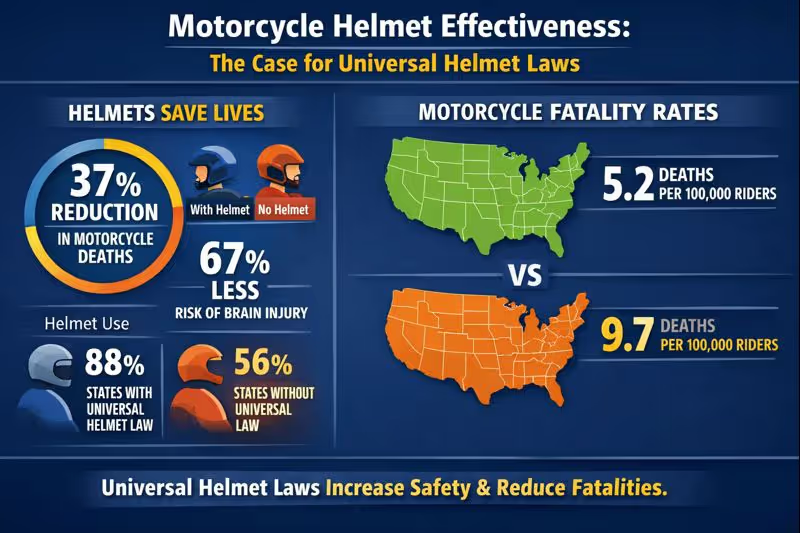
The evidence supporting helmet use is overwhelming and unambiguous. According to the National Safety Council, motorcycle helmets are estimated to be 37% effective in preventing fatal injuries to motorcycle operators and 41% effective for passengers. This means that for every 100 motorcyclists who die in accidents without helmets, approximately 37 of those deaths could have been prevented with proper head protection. When translated to real numbers, the NHTSA estimates that helmets saved approximately 1,859 lives in a single year, with an additional 802 lives that could have been saved if all motorcyclists had worn helmets.
The mechanics of helmet protection are straightforward: helmets distribute impact force across a larger area, absorb energy through crushing of the protective liner, and prevent direct contact between the skull and external objects. DOT-compliant helmets must meet Federal Motor Vehicle Safety Standard 218, which specifies minimum performance requirements for impact attenuation, penetration resistance, and retention system effectiveness. Helmets meeting these standards, identifiable by the DOT symbol on the outside back, provide proven protection that can mean the difference between walking away from a crash and suffering permanent brain damage.
Helmet Use Trends and Compliance
Despite the clear evidence supporting helmet use, compliance remains inconsistent across the United States. In states with universal helmet laws — which require all riders to wear helmets regardless of age — helmet use reaches 89% according to NHTSA observational surveys. In states without such laws, helmet use drops to just 72%. More concerning, the use of helmets meeting federal safety standards was 83% in universal law states but only 66% in states without comprehensive requirements, meaning many riders who do wear helmets are using equipment that may not provide adequate protection.
The good news is that overall helmet use has increased by approximately 8.8% from 2002 to 2022, rising from 58% to 67% nationally. However, this progress has been uneven, with helmet use peaking at 71% in 2018-2019 before declining slightly in subsequent years. For victims of motorcycle accidents, helmet use — or the lack thereof — can significantly affect legal claims. A motorcycle helmet attorney understands how to address helmet-related issues in injury claims, whether demonstrating that a helmet-wearing client took reasonable precautions or addressing defense arguments about non-helmet use in states where helmets aren't required.
State Helmet Laws: A Patchwork of Protection
The United States has a fragmented approach to motorcycle helmet requirements that creates vastly different risk environments depending on where you ride. Only 18 states and the District of Columbia have universal helmet laws requiring all riders to wear helmets. Another 29 states have partial laws requiring helmets only for certain riders — typically those under 18, 20, or 21 years of age, or those with learner's permits. Three states — Illinois, Iowa, and New Hampshire — have no helmet requirements whatsoever for any riders.
The impact of these laws on fatalities is dramatic and well-documented. In states with universal helmet laws, only 11% of motorcyclists killed in 2022 were not wearing helmets. In states without universal laws, that figure rises to 54% — nearly half of all fatalities occurring among unhelmeted riders. Historical data reinforces this pattern: when Texas had a universal helmet law from 1968 to 1977, an estimated 650 lives were saved. When the law was weakened to apply only to riders under 18, fatalities increased 35%. Similar patterns have repeated across states that have enacted, repealed, or modified their helmet requirements.
| Helmet Law Type | Number of States | Unhelmeted Fatality Rate | Overall Helmet Use |
| Universal (All Riders) | 18 + DC | 11% | 89% |
| Partial (Age-Based) | 29 | 54% | 72% |
| No Requirement | 3 | Highest | Lowest |
Author: Alex Johnson;
Source: edmmnatsakanyan.com
When You Need a Motorcycle Accident Lawyer
Signs You Should Contact a Motorcycle Accident Attorney Immediately
Not every motorcycle incident requires legal representation, but many do — and knowing the difference can significantly affect your recovery and compensation. If you've been injured in a motorcycle crash that wasn't your fault, contacting a motorcycle accident lawyer should be one of your first priorities after seeking medical attention. Insurance companies are not your advocates; they are businesses focused on minimizing payouts, and they employ experienced adjusters and attorneys specifically to reduce what they pay to accident victims.
Key situations that demand immediate consultation with a motorcycle injury lawyer include:
- Serious Injuries Requiring Extensive Treatment: If you've suffered traumatic brain injury, spinal cord damage, multiple fractures, severe road rash requiring skin grafts, or any injury requiring hospitalization, surgery, or long-term rehabilitation, the stakes are too high to navigate alone. A motorcycle crash lawyer can ensure your claim accounts for future medical costs, ongoing care needs, and permanent disabilities.
- Disputed Liability: When the other driver claims you were at fault, or when multiple parties may share responsibility, you need an attorney who can investigate the accident, gather evidence, and prove negligence. Motorcyclists often face unfair bias that assumes they were riding recklessly — an experienced motorcycle accident attorney knows how to counter these assumptions.
- Insurance Company Tactics: If the insurance company is rushing you to accept a quick settlement, denying your claim, claiming your injuries are pre-existing, or delaying the process hoping you'll give up, these are signs you need legal representation immediately.
- Significant Financial Losses: When medical bills are mounting, you're missing work, and you're unsure how you'll support your family, a motorcycle injury lawyer can fight for compensation covering all your damages — not just the minimum the insurance company wants to pay.
- Wrongful Death: If you've lost a loved one in a motorcycle accident, a wrongful death claim requires specialized legal expertise to hold the responsible party accountable and secure compensation for your family's loss
What a Motorcycle Accident Attorney Does for Your Case
A skilled motorcycle accident lawyer provides comprehensive support throughout the claims process, handling the legal complexities while you focus on recovery. The value of experienced legal representation extends far beyond paperwork — it can mean the difference between a lowball settlement and full compensation for your injuries and losses.
Comprehensive investigation: Your attorney will conduct an independent investigation into the accident, working with accident reconstruction experts, gathering surveillance footage, interviewing witnesses, analyzing police reports, and documenting the scene. This evidence is crucial for proving liability and countering the other side's attempts to blame you for the crash. Evidence can disappear quickly — surveillance footage gets deleted, witnesses forget details, physical evidence gets cleaned up — so early involvement of an attorney is essential.
Accurate damage calculation: Motorcycle accident victims often underestimate the true value of their claims. A motorcycle injury lawyerwill calculate all compensable damages, including current and future medical expenses, lost wages and reduced earning capacity, pain and suffering, emotional distress, loss of enjoyment of life, property damage, and in severe cases, the cost of permanent disability or disfigurement. Insurance companies benefit when victims don't know what their cases are worth — your attorney ensures no compensation is left on the table.
Aggressive negotiation: Insurance adjusters are trained negotiators working to minimize payouts. Your motorcycle accident attorney matches their expertise, negotiating from a position of strength backed by thorough investigation and documentation. If fair settlement cannot be reached, your attorney is prepared to take the case to trial — and insurance companies know this, often leading to better settlement offers when they face an experienced trial lawyer.
The Cost of Legal Representation: Contingency Fees Explained
One of the most important things to understand about hiring a motorcycle crash lawyer is that you typically don't need upfront money to secure representation. Most motorcycle accident attorneys work on a contingency fee basis, meaning they only get paid if you win your case. The fee — typically a percentage of your settlement or verdict — comes out of the compensation recovered, not from your pocket.
This arrangement has significant benefits for accident victims. You get access to experienced legal representation regardless of your current financial situation. Your attorney is motivated to maximize your compensation because their fee depends on the outcome. And you can focus on recovery without worrying about hourly legal bills piling up. The initial consultation is almost always free, allowing you to discuss your case, understand your options, and decide whether to proceed without any financial commitment.
Injured in a Motorcycle Accident?
If you or a loved one has been hurt in a motorcycle crash, time is critical. Evidence disappears, statutes of limitations apply, and insurance companies work quickly to minimize your claim. Contact an experienced motorcycle accident lawyertoday for a free consultation to understand your rights and options.
Protecting Your Rights After a Motorcycle Crash
Immediate Steps to Take After an Accident
What you do in the moments, hours, and days after a motorcycle accident can significantly affect both your health outcomes and your legal rights. Understanding these steps — and following them even when you're shaken and in pain — creates the foundation for any subsequent insurance claim or legal action.
At the scene (if you're able):
- Seek Medical Attention: Your health comes first. Even if you feel okay initially, adrenaline can mask serious injuries. Accept medical transport if offered, or get examined as soon as possible. Delayed medical treatment not only risks your health but can be used by insurance companies to argue your injuries weren't serious.
- Document Everything: If physically able, take photographs and videos of the accident scene, vehicle damage, road conditions, weather, traffic signals, and your injuries. Get contact information from witnesses. These records are invaluable for your motorcycle accident attorney when building your case.
- File a Police Report: Always report the accident to law enforcement. The police report provides official documentation of the incident and often includes the officer's assessment of fault.
- Don't Admit Fault: Be careful what you say at the scene. Even apologizing can be interpreted as admitting responsibility. Stick to factual statements when speaking with police and the other driver.
In the days following:
- Continue Medical Treatment: Follow all medical recommendations and attend all appointments. Document your injuries, treatment, and recovery progress.
- Don't Speak with the Other Driver's Insurance: Insurance adjusters may contact you quickly, seeming helpful while actually gathering information to use against your claim. Politely decline to give recorded statements until you've consulted with a motorcycle injury lawyer.
- Contact an Attorney: The sooner you have legal representation, the better protected your rights will be. An experienced motorcycle crash lawyer can advise you on what to say, what to document, and how to handle insurance communications.

Author: Alex Johnson;
Source: edmmnatsakanyan.com
Common Insurance Company Tactics to Watch For
Insurance companies have developed sophisticated strategies to minimize payouts on motorcycle accident claims. Recognizing these tactics helps you avoid costly mistakes and understand why experienced legal representation is so valuable.
Quick settlement offers: Within days of your accident, the insurance company may offer what seems like a substantial sum to settle your claim immediately. They know that early in the process, you likely don't understand the full extent of your injuries or the true value of your case. Accepting this offer typically requires signing a release that prevents you from ever seeking additional compensation — even if your injuries turn out to be much worse than initially thought.
Recorded statements: Adjusters may ask for a recorded statement, framing it as routine procedure. In reality, they're looking for statements they can use against you — admissions of any fault, inconsistencies with other accounts, or comments that can be used to minimize your injuries. A motorcycle accident attorney advises clients never to give recorded statements without legal counsel present.
Surveillance and social media monitoring:Insurance companies may conduct surveillance on claimants, looking for any activity that contradicts claimed injuries. They also monitor social media, searching for photos or posts that suggest you're not as injured as you claim. Even innocent posts can be taken out of context and used against you.
Blaming the motorcyclist: Perhaps the most frustrating tactic is the assumption of motorcyclist fault. Insurance companies often argue that motorcyclists are inherently reckless, were speeding, or were difficult to see — regardless of the actual circumstances. An experienced motorcycle helmet attorney knows how to counter these biased assumptions with evidence demonstrating the other driver's negligence.
| Insurance Tactic | What They're Really Doing | How an Attorney Protects You |
| Quick Settlement Offer | Closing claim before true costs are known | Ensures full injury evaluation before settlement |
| Recorded Statement Request | Gathering statements to use against you | Advises on what to say; present during statements |
| Claim Denial | Hoping you'll give up and go away | Appeals denial with evidence and legal pressure |
| Delay Tactics | Wearing you down until you accept less | Forces timely response through legal deadlines |
| Blaming the Rider | Reducing or eliminating their payout | Proves other party's negligence with evidence |
Types of Compensation in Motorcycle Accident Claims
Economic Damages: Quantifiable Financial Losses
When a motorcycle accident lawyer evaluates your case, they'll identify all compensable damages — starting with economic damages, which are the quantifiable financial losses resulting from the accident. These include:
- Medical Expenses: All costs related to treating your injuries, including emergency room visits, hospitalization, surgery, medication, physical therapy, rehabilitation, medical equipment, and ongoing care. Your attorney will calculate both current expenses and projected future medical needs.
- Lost Wages: Income you've lost because you couldn't work due to your injuries, including salary, bonuses, commissions, and benefits. If your injuries affect your ability to work in the future, your motorcycle injury lawyer may bring in vocational experts to calculate reduced earning capacity.
- Property Damage: The cost to repair or replace your motorcycle and any other damaged property, including riding gear, electronics, and personal items.
Non-Economic Damages: Pain, Suffering, and Quality of Life
Beyond financial losses, motorcycle accident victims often suffer significant non-economic damages that deserve compensation. While harder to quantify, these damages are very real and can exceed economic damages in severe injury cases.
- Pain and Suffering: Compensation for physical pain — both what you've already experienced and what you'll continue to experience due to your injuries.
- Emotional Distress: Anxiety, depression, PTSD, and other psychological impacts of the accident and your injuries.
- Loss of Enjoyment of Life: If your injuries prevent you from participating in activities you once enjoyed — riding motorcycles, playing sports, engaging in hobbies — this loss is compensable.
- Loss of Consortium: Impact on your relationships, including loss of companionship, affection, and support for your spouse or family.
- Permanent Disability or Disfigurement:Compensation for lasting physical impairments that affect your appearance, mobility, or function.
Helmet Use and Your Legal Claim
How Helmet Use Affects Compensation
In states with universal helmet laws, failure to wear a helmet can affect your legal claim if you suffer head injuries that a helmet might have prevented or reduced. Defense attorneys may argue comparative negligence — that your decision not to wear a helmet contributed to your injuries, potentially reducing your compensation. However, this argument has limitations: if your primary injuries are to areas a helmet wouldn't protect (legs, arms, internal organs), helmet use is irrelevant to those damages.
In states without universal helmet requirements, the situation is more complex. Some states don't allow helmet use (or non-use) to be considered in injury claims at all. Others permit it as a factor in calculating damages. A motorcycle helmet attorney familiar with your state's specific laws can advise how helmet issues might affect your case and develop strategies to minimize any negative impact.
Proving Your Case: Evidence That Matters
Whether you were wearing a helmet or not, the success of your motorcycle accident claim depends on evidence proving the other party's negligence caused your injuries. Key evidence your motorcycle accident attorney will gather includes:
- Police Reports: Official documentation of the accident, including the responding officer's observations and preliminary fault assessment.
- Witness Statements: Testimony from people who saw the accident, which can corroborate your account of events.
- Accident Reconstruction: Expert analysis of physical evidence, vehicle damage patterns, and scene conditions to determine how the accident occurred.
- Medical Records: Documentation of your injuries, treatment, prognosis, and the connection between the accident and your medical condition.
- Expert Testimony: Medical experts, vocational specialists, and economists who can explain the extent of your injuries and calculate future costs.
Statute of Limitations: Why Time Matters
Understanding Filing Deadlines
Every state imposes a statute of limitations — a legal deadline for filing personal injury lawsuits — that applies to motorcycle accident claims. In most states, this deadline ranges from one to four years from the date of the accident, with two years being the most common timeframe. Miss this deadline, and you lose your right to seek compensation forever, regardless of how strong your case might be or how severe your injuries are.
The statute of limitations makes early consultation with a motorcycle accident lawyer essential. While you don't need to file a lawsuit immediately — most cases settle without ever going to court — having an attorney involved early ensures that all necessary actions are taken within required timeframes. Your motorcycle accident attorneywill understand not just the primary statute of limitations but also other deadlines that apply to personal injury claims, such as notice requirements for claims against government entities, which often have much shorter windows.
Beyond formal legal deadlines, practical considerations also favor early action. Evidence disappears over time: surveillance footage gets overwritten, witnesses forget details or move away, physical evidence at the accident scene gets cleaned up or changes with weather and traffic. The sooner your motorcycle crash lawyercan begin investigating, the more evidence will be available to build a strong case proving liability and documenting your damages.
Choosing the Right Motorcycle Accident Attorney
What to Look for in Legal Representation
Not all personal injury lawyers are equally qualified to handle motorcycle accident cases. When searching for a motorcycle accident lawyer, look for an attorney who has specific experience with motorcycle claims, understands the unique dynamics of motorcycle crashes, and knows how to counter the anti-motorcyclist bias that often affects these cases.
Key factors to consider when choosing a motorcycle injury lawyer include:
- Motorcycle-Specific Experience: Ask how many motorcycle accident cases the attorney has handled and what results they've achieved. An attorney who primarily handles car accidents may not understand the unique issues in motorcycle cases.
- Trial Experience: While most cases settle, you need an attorney who is prepared and willing to go to trial if necessary. Insurance companies know which lawyers will take cases to court — and offer better settlements to clients of attorneys with strong trial records.
- Resources for Investigation: Complex motorcycle accident cases may require accident reconstruction experts, medical specialists, vocational economists, and other professionals. Your attorney should have the resources and connections to bring in these experts when needed.
- Communication and Responsiveness:You'll be working with your attorney for months, possibly years. Choose someone who communicates clearly, responds promptly to questions, and keeps you informed about your case's progress.
- Client Reviews and References: Look for reviews from past clients, particularly those who were involved in motorcycle accidents. Ask the attorney for references you can contact directly.
Conclusion: Protecting Yourself on the Road and in Court
Motorcycle riding will always carry inherent risks that no amount of safety gear or legal preparation can entirely eliminate. The physics of two-wheeled transportation, the exposure to elements and other vehicles, the vulnerability of the human body — these realities define motorcycling and cannot be engineered away. But understanding those risks, taking appropriate precautions, and knowing your legal options can dramatically improve your outcomes if the worst should happen. Wearing a DOT-compliant helmet reduces your risk of fatal head injury by 37% — a simple choice that quite literally could save your life on any given ride. Riding defensively, staying sober, and avoiding excessive speed address the factors involved in the majority of fatal motorcycle crashes.
When accidents do occur — often through no fault of the rider, caused by distracted drivers, unsafe road conditions, or the simple reality that motorcycles are harder for other motorists to see — knowing when and how to engage legal representation becomes equally important. Insurance companies are not neutral parties seeking fair outcomes for accident victims; they are businesses with shareholders, executives, and adjusters whose job performance is measured by how effectively they minimize payouts. A motorcycle accident lawyer levels the playing field, ensuring you have experienced advocacy protecting your rights and fighting for the full compensation you deserve under the law.
From investigating the accident scene to calculating the true value of your damages, from negotiating aggressively with insurance adjusters to trying your case before a jury if necessary, an experienced motorcycle accident attorneyhandles the legal complexity while you focus on what matters most: your physical recovery, your emotional healing, and your return to the life you want to live. The contingency fee structure means quality legal representation is accessible regardless of your financial situation — you pay nothing unless your attorney wins compensation for you.
If you or someone you love has been injured in a motorcycle accident, don't face the insurance companies alone. Don't accept a quick settlement offer before understanding the true value of your claim and the full extent of your injuries. Don't assume that because you were on a motorcycle, because you weren't wearing a helmet in a state that doesn't require it, or because the other driver claims you were at fault, you can't recover full compensation for injuries caused by someone else's negligence. Contact a motorcycle injury lawyer who understands these cases, who has successfully represented injured motorcyclists, who knows how to counter anti-motorcyclist bias in negotiations and in court, and who will fight aggressively for your rights.
The initial consultation is free. Legal representation costs nothing upfront and nothing at all unless you recover compensation. The difference in outcomes between represented and unrepresented accident victims can be measured in tens or hundreds of thousands of dollars — money that can pay for medical treatment, replace lost income, and help rebuild a life disrupted by someone else's negligence.
Stay safe on the road. Wear your helmet every ride, regardless of legal requirements. Ride smart, ride defensively, and ride sober. And if you need legal help after an accident, don't hesitate to seek it — your future, your recovery, and your family's financial security may depend on the choices you make in the days and weeks after a crash.
Related Stories

Read more

Read more




Content on edmmnatsakanyan.com is provided for general informational and educational purposes only. It is not intended to be, and should not be construed as, professional automotive, financial, leasing, or technical advice, nor as a substitute for consultation with qualified professionals.
The information provided on this website is for general informational purposes only and may include content related to cars, luxury vehicle leasing, automotive innovations, electric vehicles, and future mobility technologies. Use of this website does not create a professional, advisory, or client relationship between edmmnatsakanyan.com and the user.
Edmmnatsakanyan.com is not responsible for any errors or omissions, or for actions taken in reliance on the information contained on this website.