The Ultimate Motorcycle Buyer's Guide: Top Picks Across Every Category and Riding Style
The Ultimate Motorcycle Buyer's Guide: Top Picks Across Every Category and Riding Style

Content
Content
Introduction: The Golden Age of Motorcycling
We are living in the golden age of motorcycling. Never before have riders had access to such an extraordinary range of machines — from technologically advanced electric motorcycles that challenge every assumption about performance, to meticulously crafted premium bikes that elevate the riding experience to art form, to adventure machines capable of circumnavigating the globe in comfort and safety.
The motorcycle industry in 2025 stands at a fascinating crossroads. Traditional manufacturers like BMW, Ducati, and Harley-Davidson are pushing boundaries with increasingly sophisticated machines while simultaneously embracing electrification. New entrants like LiveWire, Energica, and Zero are proving that electric motorcycles can deliver experiences that satisfy even the most demanding enthusiasts. Meanwhile, Japanese giants Honda, Yamaha, Kawasaki, and Suzuki continue refining their legendary platforms while introducing revolutionary new technologies.
Whether you're a seasoned rider seeking your next dream motorcycle, a newcomer exploring the world of two wheels, or an enthusiast curious about motorcycle leasing options and the future of motorcycling, this comprehensive guide delivers everything you need to navigate the exciting landscape of premium motorcycles in 2025.
The Riding Renaissance: Global motorcycle sales exceeded 60 million units in 2024, with premium segments growing fastest. The combination of urbanization, environmental consciousness, and the eternal appeal of open-road freedom drives this renaissance.
— Alex Johnson
This guide explores the best motorcycles across every category — from track-focused superbikes to globe-trotting adventure machines, from classic cruisers to cutting-edge electric bikes. We'll examine what makes each category special, which models lead their segments, and how to choose the perfect motorcycle for your riding style and aspirations.
The road awaits. Let's discover what's possible on two wheels.
Understanding Motorcycle Categories — Finding Your Perfect Ride
Sport Bikes: The Pursuit of Speed
Sport bikes represent motorcycling's performance pinnacle — machines engineered for maximum speed, precise handling, and track-day capability while remaining (barely) street legal. These are motorcycles that make your heart race standing still.
Defining characteristics:
Aggressive riding position with clip-on handlebars and rear-set footpegs positions the rider forward, minimizing frontal area and optimizing weight distribution for cornering. Full fairings reduce aerodynamic drag, enabling top speeds exceeding 180 mph on flagship models.
Engine configurations typically feature inline-four cylinders (Japanese manufacturers) or V-twin/V4 layouts (European brands), producing 150-220+ horsepower from displacements of 600-1100cc. Modern electronics — traction control, wheelie control, cornering ABS, quick-shifters — make this power increasingly accessible.
Who should consider: Experienced riders prioritizing performance, those interested in track days, riders comfortable with aggressive ergonomics, enthusiasts who value cutting-edge technology.
Practical considerations: Sport bikes sacrifice comfort for performance. Extended rides challenge even fit riders. Insurance costs run highest in this category. However, for pure riding exhilaration, nothing else compares.
Adventure Motorcycles: Go Anywhere, Do Anything
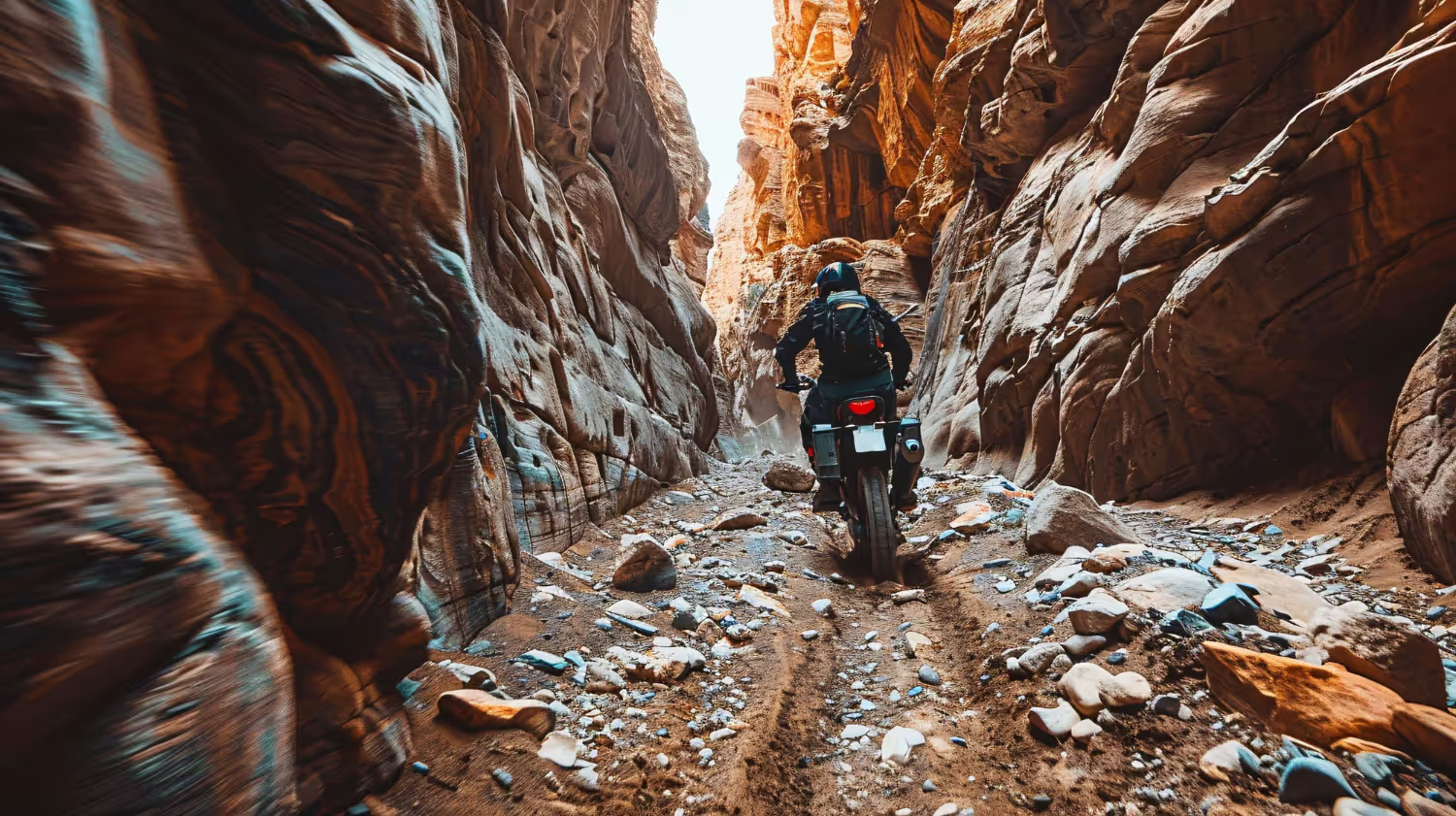
Adventure motorcycles — also called ADV bikes or adventure-tourers — have emerged as motorcycling's most versatile and fastest-growing segment. These machines promise to take you anywhere, from daily commutes to transcontinental expeditions to light off-road exploration.
Defining characteristics:
Upright, commanding riding position provides excellent visibility and all-day comfort. Long-travel suspension handles everything from potholed highways to gravel roads to light trails. Large fuel tanks enable 300+ mile ranges. Generous wind protection and luggage mounting points support serious touring.
Engine choices span from accessible 650-900cc twins perfect for newer riders to flagship 1200-1300cc machines offering sports car-rivaling performance. The segment's popularity has driven fierce competition, resulting in extraordinarily capable machines at every price point.
Who should consider: Riders wanting one motorcycle for everything, touring enthusiasts, those with light off-road aspirations, commuters valuing comfort and capability, riders planning long-distance travel.
The adventure bike advantage: No other category offers comparable versatility. A well-equipped adventure bike serves as daily commuter, weekend canyon carver, cross-country tourer, and light off-road explorer — eliminating the need for multiple motorcycles.
Cruisers: American Spirit, Global Appeal
Cruisers embody relaxed, style-focused motorcycling with roots in American riding culture. Low seat heights, forward foot controls, and laid-back riding positions prioritize comfort and image over outright performance.
Defining characteristics:
Low, wide stance projects presence and accessibility. V-twin engines deliver characterful torque at low RPMs, creating that distinctive cruiser soundtrack. Chrome, leather, and classic styling cues honor motorcycling heritage while modern versions incorporate contemporary technology invisibly.
The segment spans from entry-level machines like the Honda Rebel 500 through mid-weight options like the Indian Scout to flagship touring cruisers like the Harley-Davidson Road Glide and Indian Challenger. Each serves different needs within the cruiser philosophy.
Who should consider: Riders prioritizing comfort and style, those appreciating V-twin character, newer riders benefiting from low seat heights, enthusiasts drawn to customization culture, riders planning relaxed-pace touring.
Touring Motorcycles: The Long-Distance Champions
Touring motorcycles exist to devour miles in supreme comfort, carrying rider, passenger, and luggage across continents without compromise. These are the first-class lounges of motorcycling.
Defining characteristics:
Full fairings provide comprehensive weather protection. Integrated luggage systems (hard panniers and top cases) carry weeks of gear. Advanced audio systems, heated seats and grips, and sophisticated electronics transform long rides from endurance tests into genuine pleasures.
Flagship tourers like the Honda Gold Wing, BMW K 1600 GTL, and Harley-Davidson Ultra Limited represent the segment's ultimate expression — six-cylinder engines, reverse gears, and amenities rivaling luxury automobiles. Sport-touring models like the Kawasaki Concours 14 and BMW R 1250 RT blend touring capability with engaging performance.
Who should consider: Riders planning serious long-distance travel, two-up touring enthusiasts, those prioritizing passenger comfort, riders who view the journey as the destination.
Naked Bikes: Pure Essence
Naked bikes — also called standard or streetfighter motorcycles — strip away fairings to expose mechanical beauty while offering versatile, comfortable riding positions. These machines celebrate motorcycling's essential appeal.
Defining characteristics:
Upright riding position balances comfort and control. Exposed engines become visual centerpieces. Lighter weight and simpler construction (no fairings to damage) suit urban environments. Performance ranges from beginner-friendly to superbike-derived.
The category includes everything from the approachable Yamaha MT-07 through the versatile Triumph Street Tripleto the ferocious Ducati Streetfighter V4. This breadth makes naked bikes excellent choices for riders at any experience level.
Who should consider: Urban riders, those seeking versatile all-rounders, riders preferring upright ergonomics, enthusiasts appreciating mechanical aesthetics, newer riders progressing through displacement classes.
Electric Motorcycles: The Future Rides Now
Electric motorcycles have matured from curiosities into legitimate performance machines. Instant torque, minimal maintenance, and zero emissions attract both environmentally conscious riders and performance enthusiasts discovering electricity's unique advantages.
Defining characteristics:
Instant torque from zero RPM creates acceleration that surprises riders accustomed to internal combustion. Near-silent operation transforms the riding experience — some find this peaceful, others miss traditional engine sounds. Minimal maintenance (no oil changes, no valve adjustments, no clutch wear) reduces ownership complexity.
Current limitations include range constraints (typically 100-150 miles for most models, though improving rapidly), longer "refueling" times compared to gasoline, and higher purchase prices. Charging infrastructure, while expanding, remains less developed than gasoline availability.
Who should consider: Urban and suburban riders with predictable daily ranges, early adopters excited by new technology, environmentally conscious riders, those with home charging capability, riders intrigued by instant torque delivery.
Best Sport Bikes 2025 — Track-Ready Performance
Ducati Panigale V4: Italian Excellence
The Ducati Panigale V4 stands as superbike royalty — a World Superbike Championship-winning platform refined for street use. This is as close as most riders will ever get to racing a factory superbike.
The heart of the matter:
The 1,103cc Desmosedici Stradale V4 engine — derived directly from Ducati's MotoGP program — produces 215.5 horsepower in standard form. The Panigale V4 S adds Öhlins electronic suspension, forged wheels, and lithium battery, while the V4 SP2 represents the ultimate road-going version with carbon fiber bodywork and racing-spec components.
Technology showcase: Ducati's electronics suite includes cornering ABS EVO, traction control, wheelie control, slide control, and engine brake control — all adjustable through the full-color TFT display. The system learns and adapts to riding style, making intimidating power increasingly accessible.
[content]
Pricing starts approximately $28,000 for the base V4, rising to $45,000+ for SP2 variants. Ducati offers attractive motorcycle leasing programs through Ducati Financial Services.
Why choose it: Unmatched superbike heritage, MotoGP-derived technology, stunning Italian design, genuine race capability.
BMW S 1000 RR: Precision Engineering
The BMW S 1000 RR combines German engineering precision with genuinely friendly manners — a superbike that's as approachable as it is fast. This is the thinking rider's superbike.
Performance credentials:
The 999cc inline-four produces 205 horsepower with optional M Performance parts boosting output to 212 horsepower. Despite these figures, the RR's sophisticated electronics and balanced chassis make it remarkably approachable for experienced riders stepping into the liter-bike class.
The M package transforms the already-capable base model into a near-race-ready weapon. Carbon fiber wheels reduce unsprung mass dramatically, M Endurance chain requires no adjustment for 12,000 miles, and M Competition package adds racing-spec components throughout.
Technology integration sets BMW apart. The 6.5-inch TFT display presents information clearly, while optional radar-based adaptive cruise control brings automotive technology to motorcycling. BMW's ShiftCam variable valve timing optimizes power delivery across the rev range.
Pricing starts approximately $18,000, making it among the most accessible superbikes. The M 1000 RR race-replica reaches $32,000+.
Why choose it: Best-in-class electronics, approachable despite massive power, German build quality, extensive dealer network.
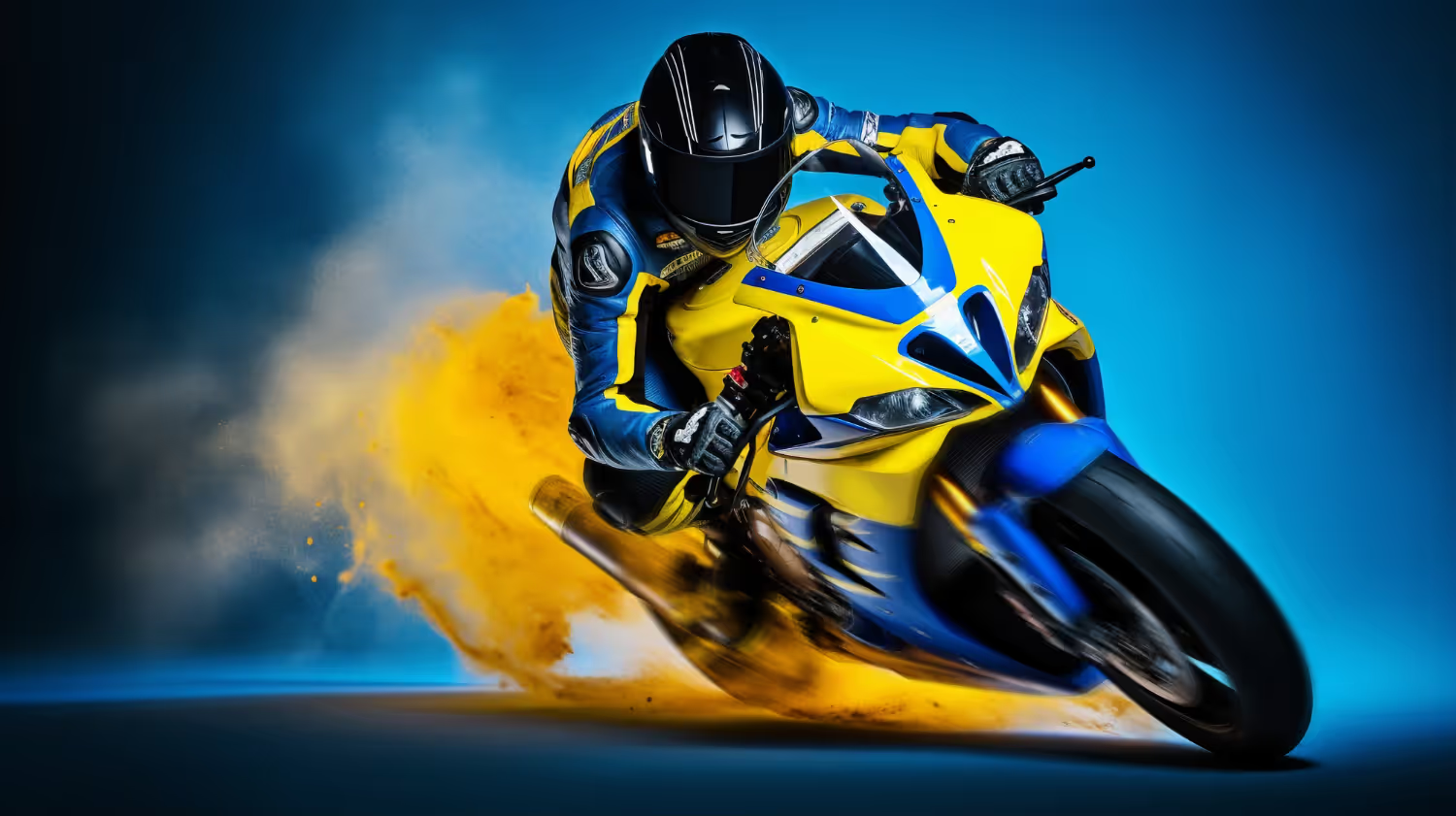
Aprilia RSV4: Racing DNA
Author: Alex Johnson;
Source: edmmnatsakanyan.com
The Aprilia RSV4 has accumulated more World Superbike Championships than any other manufacturer this century — and the street version delivers that racing pedigree directly to owners.
What makes it special:
The 1,099cc V4 engine produces 217 horsepower — the most powerful stock production engine in the class. More importantly, the engine's character rewards skilled riders with a responsiveness and mechanical connection that larger brands struggle to match.
The RSV4 Factory adds Öhlins electronic suspension, forged wheels, and brembo Stylema brakes — components typically reserved for limited-edition homologation specials. The package represents extraordinary value for riders serious about track performance.
Aprilia's APRC electronics (Aprilia Performance Ride Control) includes traction control, wheelie control, launch control, and quick-shifter in a sophisticated package developed through racing experience.
Pricing starts approximately $20,000 for the standard RSV4, with Factory variants approaching $27,000.
Why choose it: Unmatched racing pedigree, most powerful stock engine, exceptional value for racing-derived hardware, distinctive Italian character.
Kawasaki Ninja ZX-10R: Proven Champion
The Kawasaki Ninja ZX-10R has dominated World Superbike racing with Jonathan Rea's six consecutive championships — proving its capabilities in the most demanding competition imaginable.
Champion's choice:
The 998cc inline-four produces 203 horsepower with sophisticated electronics managing delivery. The ZX-10R's strength lies in its completeness — no single specification leads the class, but the overall package proves unbeatable in competition.
KRT Edition models honor Kawasaki Racing Team liveries, while the ZX-10RR represents the homologation special with Pankl connecting rods and revised combustion chambers for enhanced high-RPM performance.
Kawasaki's electronics include multiple riding modes, traction control, launch control, and cornering management — all adjustable to suit rider preferences and track conditions. The system strikes an excellent balance between intervention and rider control.
Pricing starts approximately $17,000, representing exceptional value for championship-winning capability.
Why choose it: Proven racing success, excellent value, reliable Kawasaki engineering, comprehensive electronics package.
Best Adventure Motorcycles 2025 — Explore Without Limits
BMW R 1300 GS: The Benchmark Evolved
The BMW R 1300 GS represents the latest evolution of the motorcycle that defined the adventure category. For over 40 years, the GS has set the standard others chase — and the 2025 version extends that lead.
Revolutionary updates:
The new 1,300cc boxer twin produces 145 horsepower — a 9 horsepower increase over the outgoing R 1250 GS — while losing over 25 pounds. This power-to-weight improvement transforms an already-capable machine into something genuinely exciting.
Automated Shift Assistant Pro offers optional clutchless operation — the system handles clutch engagement during shifts, though a conventional clutch remains available for those preferring traditional operation. Combined with hill-start assist, low-speed maneuvering becomes remarkably easy despite the GS's size.
Technology suite includes a 6.5-inch TFT display with connectivity, optional radar-based adaptive cruise control, blind-spot monitoring, and BMW's comprehensive rider aids. The GS essentially brings luxury car technology to motorcycling.
Pricing starts approximately $19,000, with fully-loaded GS Adventure variants exceeding $25,000. BMW offers competitive motorcycle financing and leasing options.
Why choose it: Category-defining capability, cutting-edge technology, unmatched dealer and aftermarket support, proven global reliability.
Ducati Multistrada V4: Italian All-Rounder
The Ducati Multistrada V4 proves Italian passion and adventure capability aren't mutually exclusive. This is an adventure bike that genuinely excites on twisting mountain roads.
Performance focus:
The 1,158cc V4 Granturismo engine — developed specifically for the Multistrada — produces 170 horsepower while achieving 37,000-mile valve adjustment intervals. This eliminates the maintenance penalty traditionally associated with Ducati ownership.
Radar technology makes the Multistrada V4 the first production motorcycle with front and rear radar systems. Adaptive cruise control maintains safe following distances, while blind-spot detection alerts to vehicles in adjacent lanes — automotive safety technology finally reaching motorcycles.
Rally variant adds longer-travel suspension, wire-spoke wheels, and revised ergonomics for serious off-road capability. The Multistrada V4 Rally can genuinely tackle terrain that would challenge dedicated adventure bikes.
Pricing starts approximately $23,000, with Rally variants approaching $30,000.
Why choose it: Best-in-class road performance, revolutionary radar technology, reduced maintenance requirements, distinctive Italian character.
KTM 1290 Super Adventure S: Ready for Anything
The KTM 1290 Super Adventure S embodies KTM's "Ready to Race" philosophy — even in the adventure category, performance matters. This is the adventure bike for riders who refuse to slow down.
Performance credentials:
The 1,301cc V-twin produces 160 horsepower with 103 lb-ft of torque — figures that would be impressive in a sport bike. Combined with sophisticated WP semi-active suspension and comprehensive electronics, the 1290 devours any road surface.
Suspension technology sets KTM apart. The WP APEX semi-active suspension continuously adjusts damping based on riding conditions, maintaining optimal handling whether cruising highways or attacking mountain switchbacks.
The R variant focuses on off-road capability with wire-spoke wheels, longer suspension travel, and rally-inspired ergonomics. For riders serious about leaving pavement behind, the Super Adventure R represents the flagship choice.
Pricing starts approximately $19,500 for the S variant.
Why choose it: Unmatched performance focus, excellent suspension technology, distinctive KTM character, strong off-road variants.
Honda Africa Twin: Proven Reliability
The Honda Africa Twin carries legendary heritage — the original Africa Twin dominated Paris-Dakar rallies, and modern versions honor that capability while adding contemporary refinement.
Why it matters:
Honda reliability is legendary, and the Africa Twin benefits fully from this engineering excellence. For riders planning serious expeditions where mechanical dependability is essential, few choices inspire more confidence.
The 1,084cc parallel-twin produces a modest 101 horsepower, but delivery is smooth and predictable — characteristics that matter more than peak numbers when navigating challenging terrain far from assistance.
DCT transmission (Dual Clutch Transmission) offers optional automatic operation that's particularly valuable off-road, where managing a clutch while picking through obstacles adds significant cognitive load. The system can be disabled for traditional operation when preferred.
Adventure Sports ES adds electronically adjustable suspension, larger fuel tank, and premium components for serious touring capability.
Pricing starts approximately $15,000, representing excellent value in the adventure category.
Why choose it: Legendary Honda reliability, proven expedition capability, excellent value, DCT option for off-road ease.
Author: Alex Johnson;
Source: edmmnatsakanyan.com
Best Cruisers 2025 — Style Meets Soul
Harley-Davidson Road Glide: American Icon
The Harley-Davidson Road Glide represents the pinnacle of American touring cruiser evolution — a machine that's as much cultural statement as motorcycle. This is what the open American road was made for.
Defining presence:
The frame-mounted shark-nose fairing distinguishes the Road Glide from fork-mounted alternatives, providing stable high-speed wind protection without affecting steering feel. Behind that distinctive fairing lies a serious touring machine.
The Milwaukee-Eight 117 engine — Harley's largest production powerplant — produces 125 lb-ft of torque, providing effortless highway cruising and decisive overtaking power. Optional Stage upgrades push output beyond 130 lb-ft.
Touring amenities include the Boom! Box GTS infotainment system with Apple CarPlay and GPS navigation, premium audio with handlebar-mounted speakers, heated grips, and cruise control. Riders and passengers cover hundreds of daily miles in genuine comfort.
CVO variants represent Harley-Davidson's ultimate expression — hand-finished paint, premium audio, and exclusive features create rolling works of American motorcycle art.
Pricing starts approximately $27,000, with CVO models exceeding $50,000.
Why choose it: Unmatched American heritage, iconic styling, proven touring capability, passionate owner community.
Indian Challenger: American Performance
The Indian Challenger proves American cruisers can compete with European machines on performance terms — this is the modern muscle bike reimagined for the touring category.
The PowerPlus engine:
Indian's 1,768cc PowerPlus V-twin produces 122 horsepower — extraordinary for the cruiser category. This isn't a lazy V-twin; it revs eagerly and produces power across the entire RPM range.
Handling defies expectations. The Challenger corners with confidence that surprises riders assuming cruiser dynamics must be ponderous. Upgraded brakes and suspension complement the serious horsepower.
Technology integration matches European competitors — a 7-inch touchscreen display controls navigation, audio, and vehicle settings with smartphone integration. Ride modes adjust throttle response and traction control intervention.
Dark Horse and Elite variants offer styling alternatives from blacked-out aggression to chrome-laden luxury.
Pricing starts approximately $27,000.
Why choose it: American heritage with modern performance, PowerPlus engine excellence, advanced technology, distinctive Indian character.
BMW R 18: Neo-Retro Luxury
The BMW R 18 represents BMW's tribute to motorcycling's golden age — a massive boxer twin wrapped in classic styling that nonetheless incorporates modern technology invisibly.
The Big Boxer:
BMW's 1,802cc boxer twin is the largest production boxer engine ever built. The distinctive horizontally-opposed cylinders project proudly from minimal bodywork, celebrating mechanical art. Output of 91 horsepower seems modest until you experience 116 lb-ft of torque available from idle.
Riding experience emphasizes smoothness and mechanical connection over outright speed. This is a motorcycle for savoring the journey, feeling the engine's character, and appreciating craftsmanship.
Variants span from the stripped Classic to the fully-equipped Transcontinental touring version with hard luggage, audio system, and comprehensive wind protection.
Pricing starts approximately $18,000 for Classic variants, reaching $25,000+ for Transcontinental.
Why choose it: Unique boxer character, premium German craftsmanship, distinctive design, touring variants available.
Indian Scout: Accessible Excellence
The Indian Scout makes premium American cruiser ownership accessible without sacrificing authenticity. This is the cruiser to recommend to riders discovering the segment.
Approachable performance:
The 1,133cc V-twin produces 100 horsepower in standard form, with the Scout Bobber Twenty and Scout Rogueoffering styling variations. The Super Scout takes touring capability seriously with frame-mounted fairing and luggage options.
Ergonomics suit broader rider populations than many cruisers. The Scout's moderate seat height, balanced weight distribution, and manageable power delivery build confidence for riders at various experience levels.
Value proposition stands out — the Scout delivers genuine Indian heritage, competitive performance, and premium build quality at prices below Harley-Davidson equivalents.
Pricing starts approximately $13,000.
Why choose it: Accessible Indian heritage, competitive performance, excellent value, broad rider suitability.
Best Electric Motorcycles 2025 — Riding the Revolution
LiveWire S2 Del Mar: Mainstream Electric
LiveWire — Harley-Davidson's electric motorcycle brand — targets the mainstream with the S2 Del Mar, proving electric motorcycles can be accessible and exciting simultaneously.
The proposition:
At approximately $17,000, the Del Mar reaches price points competitive with premium gasoline motorcycles. The 80-horsepower motor delivers instant torque that makes city riding genuinely thrilling, while 110 miles of urban range suits most daily use patterns.
Design language breaks from traditional motorcycle aesthetics, embracing electric-specific opportunities. The absence of engine and exhaust components enables distinctive proportions that signal technological advancement.
Riding experience converts skeptics. The instant torque response, silent operation, and simplified controls (no clutch, no gears) create an experience that's different from — not lesser than — traditional motorcycles.
Why choose it: Accessible pricing, Harley-Davidson backing, genuine performance, distinctive design.
Energica Experia: Electric Touring
The Energica Experia answers the question: can electric motorcycles tour seriously? With 260 miles of highway range and DC fast charging capability, the answer is increasingly yes.
Breakthrough capability:
The 22.5 kWh battery pack — largest in production electric motorcycles — provides genuine long-distance capability. DC fast charging from 0-80% takes approximately 40 minutes, enabling multi-hundred-mile touring days with strategic charging stops.
Touring equipment includes wind protection, heated grips, cruise control, and luggage mounting points. The Experia isn't an electric bike that can tour — it's a touring bike that happens to be electric.
Italian engineering delivers premium fit and finish expected from European manufacturers. This isn't a startup prototype; it's a refined production motorcycle.
Pricing reaches approximately $24,000.
Why choose it: Longest electric range available, genuine touring capability, Italian quality, fast charging.
Zero SR/S: Sport Performance
The Zero SR/S targets riders seeking sport bike aesthetics and performance from electric propulsion. With 110 horsepower equivalent and 140 lb-ft of torque, it delivers legitimate sport bike acceleration.
Performance focus:
Zero-to-sixty acceleration under 4 seconds puts the SR/S in superbike territory. Unlike internal combustion superbikes, this performance is available instantly — no rev-building, no clutch management, just immediate thrust.
Cypher III+ operating system offers extensive customization through smartphone apps. Riders can tune throttle response, regenerative braking strength, and speed limits to suit preferences and conditions.
Range considerations require realistic expectations. The 161-mile maximum range reduces significantly with spirited riding. Urban riders with home charging find the SR/S practical; long-distance touring challenges current battery technology.
Pricing starts approximately $20,000.
Why choose it: Genuine sport performance, sophisticated electronics, established manufacturer, sport bike styling.
Harley-Davidson LiveWire One: The Original
The original LiveWire One established Harley-Davidson's electric credentials — proving the legendary American brand could create a compelling electric motorcycle.
Premium positioning:
The LiveWire One delivers 105 horsepower with 0-60 mph acceleration under 3 seconds — performance that embarrasses most gasoline motorcycles regardless of displacement. The riding experience converts even skeptical Harley traditionalists.
Brand significance matters. Harley-Davidson's electric commitment signals that electrification isn't a fringe movement but an industry-wide transition. The LiveWire demonstrates that heritage brands can embrace new technology without abandoning their essence.
Charging flexibility includes Level 1, Level 2, and DC fast charging compatibility. Harley-Davidson's dealer network provides charging access during service visits.
Pricing starts approximately $22,000.
Why choose it: Harley-Davidson heritage, genuine performance, comprehensive charging options, dealer network support.
Motorcycle Leasing — Smart Acquisition Strategies
Why Lease a Motorcycle?
Motorcycle leasing has emerged as an increasingly attractive acquisition strategy, particularly for premium motorcycles where purchase prices approach automobile territory.
Financial flexibility:
Leasing reduces monthly payments compared to traditional financing while enabling access to higher-tier motorcycles. A rider who might finance a mid-range bike could potentially lease a premium machine for similar monthly outlays.
Technology evolution in motorcycling proceeds rapidly. Leasing enables regular upgrades, ensuring riders always experience current technology — particularly valuable as electronics and electric powertrains advance.
Depreciation protection shields lessees from resale value uncertainty. Premium motorcycles can depreciate significantly, particularly first-year models of new platforms. Leasing transfers this risk to financial institutions.
Seasonal ownership patterns suit leasing economics. Riders in northern climates may accumulate only 3,000-5,000 annual miles — well within typical lease allowances while maximizing riding time relative to ownership costs.
Manufacturer Leasing Programs
BMW Motorrad Financial Services offers comprehensive leasing programs across the BMW motorcycle lineup. Terms typically span 24-36 months with competitive rates and end-of-lease flexibility.
Ducati Financial Services provides leasing options particularly attractive for premium models like the Panigale V4 and Multistrada V4, where purchase prices might otherwise limit accessibility.
Harley-Davidson Financial Services extends leasing to most Harley models, enabling riders to experience CVO and premium touring models without full purchase commitment.
Honda, Yamaha, and Kawasaki offer manufacturer-backed financing and leasing through their financial services divisions, with promotional rates frequently available on specific models.
Leasing Considerations
Mileage allowances typically range from 5,000-8,000 annual miles for motorcycle leases — sufficient for recreational riders but potentially limiting for daily commuters or touring enthusiasts. Negotiate appropriate allowances before signing.
Wear-and-tear standards require understanding before committing. Minor cosmetic damage acceptable with automobiles may constitute excess wear on motorcycles where exposed surfaces are more visible.
Modification restrictions typically prohibit permanent alterations. Riders planning extensive customization may find purchasing more appropriate than leasing.
End-of-lease options include returning the motorcycle, purchasing at predetermined residual value, or transitioning to a new lease. Understanding these options before commitment ensures alignment with ownership goals.
Leasing Reality: Motorcycle leasing makes particular sense for premium machines, technology-focused riders wanting regular upgrades, and those riding recreationally within typical mileage allowances. Traditional purchasing remains appropriate for daily commuters, extensive customizers, and long-term ownership planners.
— Alex Johnson
Essential Riding Gear — Safety Meets Style
Helmets: Non-Negotiable Protection
Helmet selection represents the most critical gear decision any rider makes. Modern helmets combine unprecedented protection with comfort, ventilation, and features that enhance the riding experience.
Full-face helmets provide maximum protection, covering the entire head including chin and face. For street riding, this configuration offers the best combination of safety and noise reduction. Premium options from Shoei, Arai, AGV, and Schuberth represent the gold standard.
Modular helmets enable the chin bar to pivot upward, facilitating communication and hydration without full removal. The Schuberth C5 and Shoei Neotec II lead this category, offering full-face protection with added convenience.
Adventure helmets include peak visors and enhanced ventilation for off-road use while maintaining on-road capability. The Arai XD-4 and Shoei Hornet ADV serve dual-sport and adventure riders well.
Certification standards matter. Look for DOT (United States), ECE (Europe), and increasingly SNELL or FIM certifications. These standards ensure helmets provide meaningful protection in actual crash scenarios.
Protective Apparel: Beyond Leather
Riding jackets and pants have evolved far beyond traditional leather. Modern options offer protection, weather resistance, and style that transitions seamlessly from motorcycle to destination.
Textile gear from Klim, REV'IT!, and Alpinestars offers superior ventilation, weather versatility, and armor integration. Multi-season riders particularly benefit from textile's adaptability.
Leather remains supreme for abrasion resistance, making it the choice for sport and track riding. Premium leather gear from Dainese, Alpinestars, and REV'IT! combines protection with striking aesthetics.
Adventure-specific gear addresses the unique demands of off-road exploration — enhanced ventilation, armor positioning that accommodates standing riding positions, and durability against debris.
Armor certification follows CE ratings. Level 1 armor provides baseline protection; Level 2 significantly increases impact absorption. Back protectors deserve particular attention — either integrated or separate.
Boots and Gloves: Completing Protection
Motorcycle boots protect ankles and feet while providing controls feel essential for safe operation. Casual-appearing options from TCX, Alpinestars, and Dainese offer protection without screaming "motorcycle gear."
Gloves provide abrasion protection and crucial control feel. In a fall, hands instinctively extend — gloves prevent devastating injuries. Premium options balance protection with the sensitivity needed for brake and throttle finesse.
Heated gear extends riding seasons for dedicated enthusiasts. Gerbing, Warm & Safe, and FirstGear offer heated liners, gloves, and pants that maintain comfort in temperatures that would otherwise end riding seasons.
Buying Guide — Choosing Your Perfect Motorcycle
Honest Self-Assessment
Successful motorcycle selection begins with honest evaluation of intended use, experience level, and priorities.
Riding purpose clarity prevents expensive mistakes. A daily commuter needs different attributes than a weekend canyon carver. A touring enthusiast requires different capabilities than an aspiring track rider. Define your primary use case before shopping.
Experience level assessment requires humility. Newer riders gravitating toward 200-horsepower superbikes court disaster. The motorcycle industry offers brilliant machines at every power level — starting appropriately and progressing thoughtfully builds skills without unnecessary risk.
Physical fit matters more than specifications. A tall rider cramped on a small sport bike won't enjoy riding regardless of performance. A shorter rider struggling with a tall adventure bike's seat height will lack confidence. Test sit (and ride) before committing.
New vs. Used Considerations
New motorcycle advantages include manufacturer warranties, latest technology, full service history, and the emotional satisfaction of ownership from new. For riders planning long-term ownership, new purchases provide maximum peace of mind.
Used motorcycles offer tremendous value. Significant depreciation occurs in early ownership years — purchasing a 2-3 year old motorcycle with low mileage often provides 80% of the new experience at 60% of the price. Manufacturer-certified pre-owned programs reduce used-purchase risks.
Private party purchases require caution. Verify titles thoroughly, inspect maintenance records, and consider pre-purchase inspections from qualified technicians. The savings aren't worthwhile if problems emerge later.New vs. Used Considerations
| Criteria | New Motorcycle | Used Motorcycle |
| Purchase Price | Higher | Significantly lower |
| Depreciation | Highest in the first years | Major depreciation already absorbed |
| Warranty | Full manufacturer warranty | Usually none, except certified pre-owned programs |
| Technology | Latest available | May be outdated |
| Service History | Fully transparent | Depends on previous owner |
| Risk Level | Minimal | Higher, especially in private-party sales |
| Emotional Factor | Satisfaction of owning new | Practicality and cost savings |
| Value for Money | Lower | Up to ~80% of the experience for ~60% of the price |
| Best Use Case | Ideal for long-term ownership | Best with verified history and inspection |
Important Note:
Private-party purchases require extra caution:
Verify the title thoroughly
Review maintenance records
Consider a pre-purchase inspection by a qualified technician
Savings are only worthwhile if no hidden problems emerge later.
Essential Test Ride Guidance
Extended evaluation reveals what showroom visits cannot. Request overnight or weekend loans when possible — living with a motorcycle through normal routines provides insight brief rides miss.
Ride multiple motorcycles before deciding. Comparing different models and categories clarifies personal preferences. What seemed essential on paper may feel less important after direct experience.
Include your typical riding in evaluations. Highway comfort, urban maneuverability, passenger accommodation, luggage capability — test the scenarios you'll actually encounter.
Trust ergonomic impressions. Minor discomfort during a 30-minute test ride becomes significant pain during 3-hour rides. Seek motorcycles that fit naturally from the first moment.
Dealer Relationships
Establishing dealer relationships provides value beyond transactions. Quality dealers offer riding gear expertise, service scheduling convenience, and community connections that enhance the ownership experience.
Service capability matters for ongoing satisfaction. Verify the dealer maintains qualified technicians, reasonable service scheduling, and parts availability. The purchase experience matters less than the ownership experience.
Community involvement signals dealer commitment. Dealers sponsoring group rides, rider training, and local events demonstrate investment beyond sales transactions.
The Future of Motorcycling — Technology and Trends
Connected Motorcycles
Connectivity transforms motorcycle ownership through smartphone integration, over-the-air updates, and cloud-based services.
BMW Connected Ride enables navigation routing to watches and smartphones, emergency call functionality, and ride tracking. The system exemplifies automotive technology reaching motorcycles.
Ducati Multistrada radar systems demonstrate advanced driver assistance systems adapting to two wheels. Adaptive cruise control and blind-spot detection — commonplace in cars — are becoming available to riders.
Future developments will likely include V2X (vehicle-to-everything) communication enabling motorcycles to receive warnings about hazards beyond rider visibility. This technology could dramatically improve rider safety.
Autonomous Challenges
Autonomous vehicles present both challenges and opportunities for motorcyclists.
Detection concerns arise because self-driving systems are optimized for larger vehicles. Motorcycle visibility to autonomous systems requires ongoing attention from developers and regulators.
Potential benefits include autonomous systems that specifically watch for motorcycles, V2X communication alerting autonomous vehicles to motorcycle presence, and traffic patterns optimized for mixed vehicle types.
The riding experience itself cannot be automated while remaining meaningful. Unlike automobile travel, motorcycling engagement is the purpose — this may preserve riding as autonomous vehicles proliferate.
Electrification Trajectory
Electric motorcycle development accelerates across all segments.
Range improvements continue as battery energy density increases approximately 7% annually. Today's 150-mile range becomes tomorrow's 250-mile range without size increases — eventually eliminating the primary electric motorcycle limitation.
Charging infrastructure expansion supports electric motorcycle viability. The same networks serving electric automobiles accommodate motorcycles, with dedicated motorcycle charging emerging in some markets.
Traditional manufacturers — Honda, Yamaha, Kawasaki, BMW — have announced electric motorcycle programs. When industry leaders commit resources, the technology's future becomes certain.
The Enduring Appeal
Despite technological advancement, motorcycling's fundamental appeal remains constant — freedom, engagement, connection to environment and machine. Technology enhances rather than replaces these experiences.
Community bonds strengthen through shared passion. Riders wave to strangers, stop to assist stranded motorcyclists, and form connections transcending typical social boundaries. This community remains regardless of propulsion technology.
The call of the open road persists across generations. Each year, new riders discover what millions already know — that there's nothing quite like experiencing the world from a motorcycle's saddle.
Frequently Asked Questions
What is the best motorcycle for beginners?Question
The Honda Rebel 500, Kawasaki Ninja 400, and Yamaha MT-03 offer accessible power, manageable ergonomics, and genuine quality. These motorcycles build skills without overwhelming new riders, and they remain enjoyable as abilities develop.
How much does motorcycle insurance cost?
Insurance costs vary significantly based on motorcycle type, rider experience, location, and coverage levels. Sport bikes command highest premiums; cruisers and standards cost less. New riders should budget $500-1,500 annually and shop multiple providers.
Is motorcycle leasing worth it?
Leasing suits riders wanting premium motorcycles with lower monthly payments, those preferring regular upgrades, and recreational riders within typical mileage allowances. Traditional purchasing better serves daily commuters, customizers, and long-term ownership planners.
What motorcycle has the best resale value?
BMW GS models, Honda Gold Wings, and Harley-Davidson touring bikes consistently retain value well. Limited-edition and collectible models can appreciate. Japanese sport bikes depreciate fastest, though purchasing used captures this depreciation for new owners
What gear do I need to start riding?
At minimum: helmet (full-face recommended), jacket with armor, gloves, and boots covering ankles. Pants with armor protection add significant safety. Budget $1,000-2,000 for quality entry-level gear; premium gear costs more but lasts longer and protects better.
How often do motorcycles need maintenance?
Service intervals vary by motorcycle. Most modern bikes require oil changes every 4,000-8,000 miles, with major services at 12,000-16,000 mile intervals. Adventure and touring bikes often have longer intervals; sport bikes may require more frequent attention. Electric motorcycles need minimal maintenance.
Conclusion: Your Journey Awaits
The world of motorcycling has never offered more compelling choices. From the technological sophistication of the BMW R 1300 GS to the raw emotion of the Ducati Panigale V4, from the American heritage of the Harley-Davidson Road Glide to the silent revolution of LiveWire electric motorcycles, exceptional machines await riders at every experience level and budget.The decision to ride represents more than transportation choice — it's an embrace of engagement over passivity, of connection over isolation, of experiences over mere destinations. Every rider remembers their first motorcycle and the freedom it represented. That feeling never fades.Whether you're drawn to the adventure motorcycle segment's promise of global exploration, the sport bike category's pursuit of performance excellence, the cruiser world's celebration of style and heritage, or the electric motorcyclerevolution's vision of sustainable riding, the perfect motorcycle exists for your aspirations.
The technology has never been better. Modern motorcycles offer safety features, performance capabilities, and comfort levels that previous generations couldn't imagine. Electronics that would have seemed like science fiction a decade ago now come standard on mid-range machines.
The community has never been more welcoming. Riders of all backgrounds, ages, and experience levels share roads and swap stories. The wave exchanged between passing motorcyclists transcends brand loyalty and riding style — it acknowledges shared understanding of what motorcycles mean.
Your journey begins with a single decision. Research the categories that appeal to you, test ride the models that interest you, invest in proper gear, and join the millions who've discovered that life is better on two wheels. The road is calling — it's time to answer.
— Alex Johnson
About the Author: The Drive Smart Editorial Team comprises motorcycle journalists, racing enthusiasts, and industry analysts dedicated to helping riders discover their perfect machines and maximize their two-wheeled experiences.
Related Stories
Read more
Read more

Content on edmmnatsakanyan.com is provided for general informational and educational purposes only. It is not intended to be, and should not be construed as, professional automotive, financial, leasing, or technical advice, nor as a substitute for consultation with qualified professionals.
The information provided on this website is for general informational purposes only and may include content related to cars, luxury vehicle leasing, automotive innovations, electric vehicles, and future mobility technologies. Use of this website does not create a professional, advisory, or client relationship between edmmnatsakanyan.com and the user.
Edmmnatsakanyan.com is not responsible for any errors or omissions, or for actions taken in reliance on the information contained on this website.