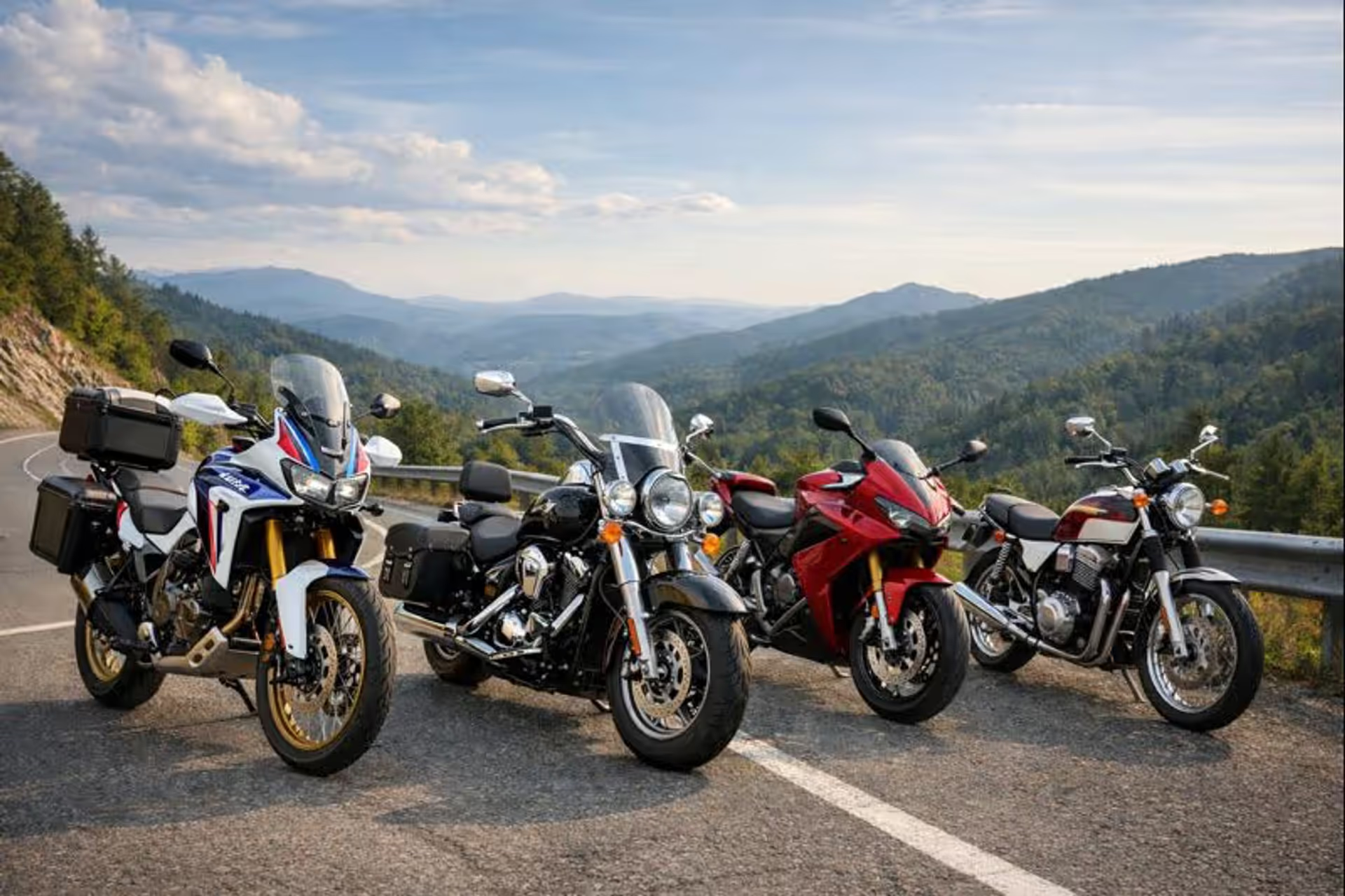
Road Bike vs Cruiser vs Sportbike vs Enduro: How to Choose the Right Motorcycle for You
Road Bike vs Cruiser vs Sportbike vs Enduro: How to Choose the Right Motorcycle for You

Introduction: The Search for Your Perfect Motorcycle
There's a moment every motorcyclist remembers — that first time you twist the throttle and feel the world fall away behind you. The wind becomes a companion, the road transforms into possibility, and suddenly you understand why people speak of motorcycles with the kind of reverence usually reserved for first loves and childhood dreams.
But before that moment can happen, you face a decision that will shape every ride to come: which motorcycle is right for you?
The motorcycle world can seem bewildering to newcomers. Walk into any dealership, and you'll encounter machines that look like they belong in different universes — sleek missiles crouched low to the ground, chrome-laden cruisers stretching toward the horizon, tall adventure bikes ready to conquer continents, and practical standards that seem to do everything reasonably well. Each represents a distinct philosophy of what motorcycling should be, and choosing between them means understanding not just the machines themselves, but yourself.
This isn't a decision to make lightly. Unlike cars, where a sedan is mostly a sedan regardless of brand, motorcycles in different categories deliver fundamentally different experiences. A cruiser rider and a sportbike enthusiast might as well be practicing different sports — they share two wheels and an engine, but almost nothing else about their riding experience overlaps.
The good news? There's no wrong answer. The motorcycle world has evolved over more than a century to offer something for everyone. The key is matching your actual needs, honest self-assessment of your abilities, and genuine desires to the category that serves them best. Let's explore what makes each major type unique, and help you find the machine that will deliver that transcendent moment — again and again.
The Road Bike: Motorcycling's Honest Foundation
If motorcycles were a family, the road bike would be the reliable sibling — not flashy, never demanding attention, but always there when you need it, capable of handling whatever life throws its way. Known variously as standards, naked bikes, or simply "road bikes," these machines represent motorcycling distilled to its essence: an engine, two wheels, handlebars, and nothing more than necessary.
The philosophy behind road bikes is refreshingly straightforward. Rather than optimizing for any single purpose — maximum speed, ultimate comfort, off-road capability — they seek balance across all dimensions. The result is a motorcycle that commutes through city traffic on Monday, carves canyon roads on Saturday, and might even carry you across state lines on a long weekend, all without complaint.
Sitting on a road bike feels natural in a way that other motorcycle types often don't. Your spine stays relatively upright, your hands rest on handlebars at a comfortable height, and your feet plant directly beneath your hips. This neutral position means you can ride for hours without the wrist strain of a sportbike or the hip-angle challenges of a cruiser. It's the position your body expects when it thinks "motorcycle."
The absence of fairings — those plastic body panels that cover sportbikes and touring machines — gives road bikes their "naked" designation and several practical advantages. Without bodywork to manufacture, these motorcycles often cost less than their faired siblings. When (not if) you drop your bike in a parking lot, you're replacing a mirror and maybe a lever rather than expensive plastic panels. And there's an aesthetic honesty to seeing the engine exposed, watching the mechanical heart of your machine do its work.
From Beginner-Friendly to Track-Ready
Modern road bikes span an enormous range. At the accessible end, machines like the Honda CB300R, Yamaha MT-03, and Kawasaki Z400 welcome new riders with manageable power, light weight, and forgiving handling. These 300-400cc motorcycles produce enough performance to be genuinely fun while remaining docile enough for someone still developing their skills. Many experienced riders keep one around for urban duty — there's something delightful about a light, simple machine in city traffic.
The middleweight segment represents perhaps motorcycling's sweetest spot. The Yamaha MT-07 has earned an almost cult following for delivering exactly enough of everything: enough power to thrill, enough comfort for longer rides, enough capability to grow with a rider's skills, all at a price that doesn't require a second mortgage. The Kawasaki Z650, Suzuki SV650, and Honda CB650R occupy similar territory, each with its own character but all sharing that fundamental road bike balance.
At the extreme end, machines like the Ducati Streetfighter V4 and Kawasaki Z H2 prove that road bikes can match superbikes in straight-line acceleration while retaining the upright seating position. These "hyper-naked" machines blur category lines, offering sportbike engines in more practical packaging. They're not beginner bikes by any measure, but they demonstrate how far the category can stretch.
The road bike's greatest strength is also its limitation: by being good at everything, it excels at nothing. A dedicated sportbike will outhandle it on a racetrack. A touring machine will carry you more comfortably across continents. A cruiser will turn more heads at a bike night. But if you need one motorcycle to serve as daily transportation, weekend entertainment, and occasional tourer, the road bike asks you to compromise the least.
The Enduro: When Pavement Is Just a Suggestion
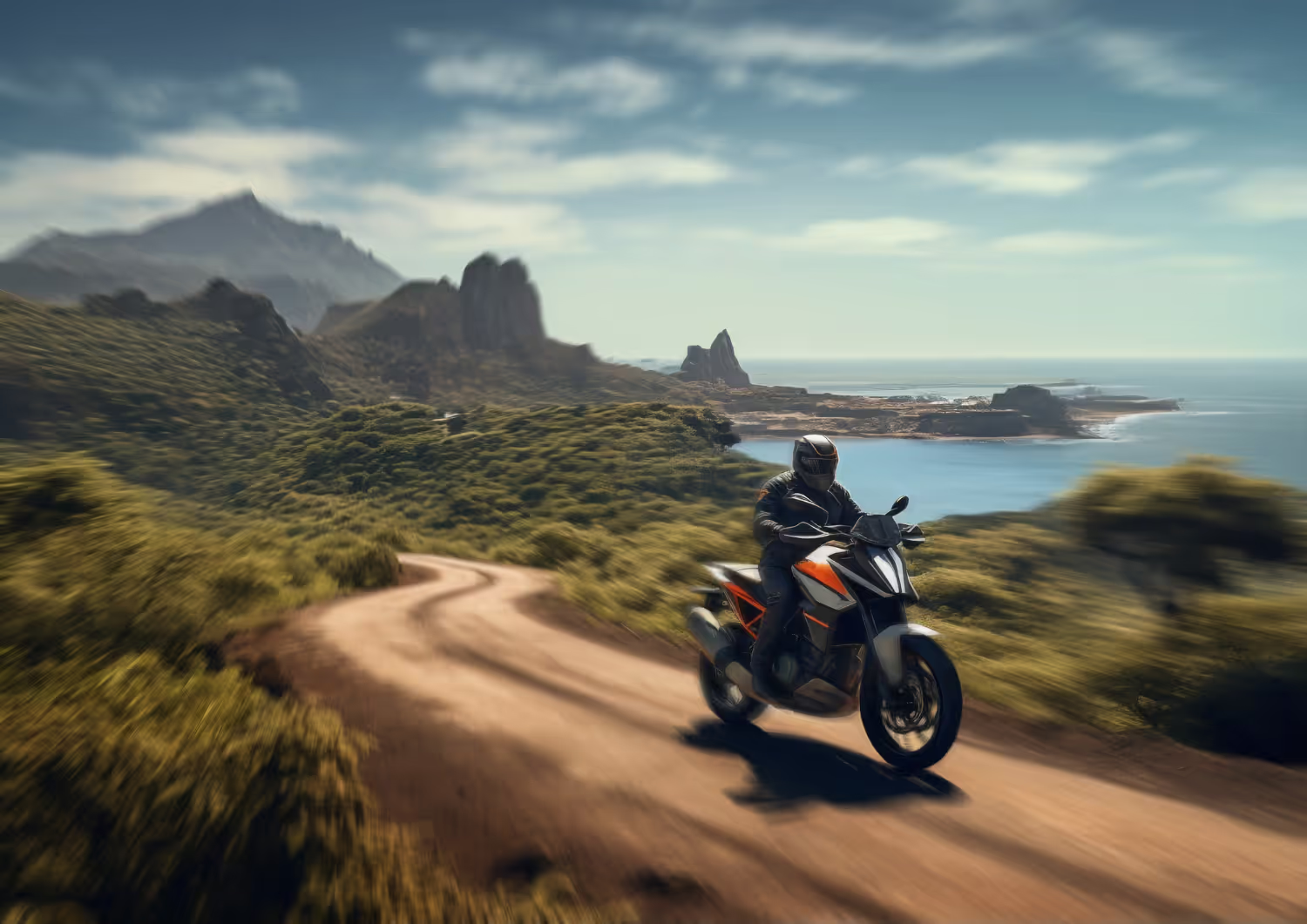
Some riders look at the end of the asphalt not as a boundary but as an invitation. For them, the real adventure begins where the road ends — on fire trails cutting through forests, rocky paths climbing mountain passes, and sandy tracks leading to places no car will ever reach. The enduro motorcycle exists for these riders, bridging the gap between street-legal transportation and genuine off-road capability.
Understanding the enduro requires understanding the compromises it makes — and why riders eagerly accept them. Every design decision serves the singular goal of handling rough terrain while remaining legal to ride on public roads.
Suspension tells the story most clearly. Where a typical street motorcycle might offer four to five inches of wheel travel, an enduro provides eight to twelve inches of carefully tuned suspension travel. This isn't luxury; it's necessity. When your front wheel drops into a rut or slams against a rock, that suspension travel is the difference between maintaining control and being launched over the handlebars. The long-travel forks and rear shock allow the wheels to follow terrain that would destroy conventional motorcycles.
This suspension height creates the enduro's most obvious characteristic: tall seat heights that place your hips thirty-five to thirty-seven inches off the ground. For many riders, this means tippy-toes at stops or the "one-cheek" technique of sliding off the seat to plant a single foot firmly. The height feels precarious at first, but it serves crucial purposes off-road — providing ground clearance to cross obstacles without dragging the engine or frame, and allowing riders to stand on the pegs (the natural off-road riding position) without the bike becoming unwieldy.
The tires fitted to enduros look nothing like street rubber. Knobby patterns with aggressive blocks grip loose surfaces — dirt, gravel, sand, mud — that would send a street tire sliding hopelessly. These knobs dig into the surface, finding purchase where smooth rubber cannot. The trade-off appears on pavement, where those same knobs squirm and howl, providing less grip and wearing faster than street-oriented tires. Dual-sport tires attempt to split the difference, but physics imposes limits on any compromise.
Weight becomes critical off-road in ways that street riders rarely consider. A motorcycle that feels manageable on smooth pavement becomes a wrestling opponent on loose surfaces. When the rear tire spins in sand, when the front wheel deflects off a rock, when you need to physically lift the bike over an obstacle, every pound matters. True enduros hold weight to 250-350 pounds — featherweight by motorcycle standards — achieved through smaller fuel tanks, minimal bodywork, and engines optimized for power-to-weight rather than peak output.
This weight obsession explains why enduro fuel tanks typically hold only two to three gallons, limiting range to perhaps 100-150 miles. On trails, that's usually sufficient; on highways, it means frequent fuel stops and careful planning. The small tank, combined with minimal or no wind protection, makes extended pavement travel more endurance test than enjoyment. Enduros can cover highway miles, but they don't do so happily.
Two Schools of Enduro Philosophy
The Japanese manufacturers have long understood this market. The Suzuki DR650 and Kawasaki KLR650 have remained in production for decades with only minor updates, beloved for their simplicity, durability, and go-anywhere capability. These aren't exciting motorcycles — their single-cylinder engines produce modest power and agricultural sound — but they've carried riders around the world on adventures that would destroy more sophisticated machines. The Honda CRF300L offers similar philosophy in a smaller, lighter package perfect for newer riders or those who prioritize off-road capability over highway comfort.
European manufacturers, particularly KTM and Husqvarna, take a different approach. Their enduros like the KTM 500 EXC-F derive directly from competition motorcycles, offering performance that approaches pure dirt bikes while maintaining street legality. These machines sacrifice some durability and everyday usability for capability that lets skilled riders tackle serious single-track trails. They're not beginner bikes, but for experienced riders seeking maximum off-road performance in a street-legal package, they're unmatched.
The adventure motorcycle segment has blurred these boundaries further. Machines like the BMW R 1300 GS, Honda Africa Twin, and KTM 1290 Super Adventure offer genuine off-road capability combined with touring comfort impossible on true enduros. They're heavier — significantly so — which limits them on technical terrain but makes them far more pleasant for the highway miles connecting off-road sections. These are motorcycles for riders whose adventures are 70% pavement and 30% dirt, rather than the reverse.
Choosing an enduro means accepting that pavement riding will be compromised. Your commute will be louder, windier, and more tiring than on a road bike. Highway trips will require more frequent stops and arrive at destinations with more fatigued riders. But when you turn off the asphalt onto that fire road, when you follow the trail through the forest to an overlook no car has ever reached, when you wade a stream that would stop any other vehicle — in those moments, you'll understand why enduro riders accept every compromise without complaint.
Author: Alex Johnson;
Source: edmmnatsakanyan.com
The Cruiser: America's Gift to Motorcycling
No motorcycle category is more distinctly American than the cruiser. Born from post-war customization culture, refined through decades of evolution, and elevated to cultural icon status by Harley-Davidson and its imitators, the cruiser represents a philosophy of motorcycling that prioritizes experience over performance, style over speed, and the journey over the destination.
To understand cruisers, you must first understand their heritage. After World War II, returning American servicemen began modifying their motorcycles, stripping away unnecessary weight, extending front forks, and creating machines that reflected American values of individualism and freedom. These "choppers" and "bobbers" established the aesthetic that would eventually become the factory cruiser — long, low, and loud.
The riding position defines the cruiser experience immediately. Where other motorcycles tuck your legs beneath you, cruisers stretch them forward to foot controls mounted ahead of the engine. Your arms reach up and forward to wide handlebars, your back reclines slightly, and your entire posture suggests relaxation rather than aggression. This isn't a position for attacking corners or chasing lap times; it's a position for watching America scroll past at a comfortable pace.
Cruiser engines are almost universally V-twins, a configuration chosen as much for character as capability. The V-twin's uneven firing pulses create that distinctive "potato-potato" rumble that announces a cruiser's presence blocks away. At idle, the whole motorcycle shakes with contained energy; under acceleration, the engine produces waves of torque rather than the screaming power of sportbike motors. Cruiser riders speak of "powerband" differently — they want strong, immediate response when the throttle twists, then a long, lazy pull toward highway speeds.
Harley-Davidson's dominance of this market is so complete that "Harley" has become almost synonymous with "cruiser" in popular consciousness. The Milwaukee company has refined its formula over decades, creating machines that satisfy both traditionalists and those seeking more modern capability. The Sportster S represents a sportier interpretation while the Heritage Classic channels nostalgia. The touring-oriented Street Glide and Road Glide add wind protection and luggage for serious mile-eating. Each carries that ineffable Harley character — a combination of sound, vibration, and presence that no other manufacturer quite replicates.
Indian Motorcycle, resurrected in 2011, provides Harley's most credible American competition. Indian's history actually predates Harley-Davidson, and the brand carries genuine heritage rather than manufactured nostalgia. Modern Indians like the Scout and Chief lines offer refined interpretations of cruiser themes, often with technological advantages over their Milwaukee rivals while maintaining the essential character that defines the category.
Beyond American Borders
Japanese manufacturers have produced cruisers for decades with mixed success. Honda's Rebel series, particularly the Rebel 500 and 1100, has found genuine popularity by offering cruiser style with Honda's legendary reliability and accessible pricing. Kawasaki's Vulcan series and Yamaha's V Star and Bolt lines compete capably on specifications and value. What Japanese cruisers often lack is the cultural authenticity that Harley and Indian owners prize — the sense that buying their motorcycle connects them to something larger than themselves.
The cruiser's low seat height — often just 25-28 inches — deserves special mention. For riders of shorter stature who struggle to reach the ground on other motorcycles, cruisers offer confidence-inspiring security. That flat-footed stability at stops shouldn't be underestimated; nothing erodes a new rider's confidence faster than feeling like they might tip over at every traffic light. The cruiser's low center of gravity also makes low-speed maneuvering more intuitive, though the long wheelbase complicates tight U-turns.
Performance-minded riders sometimes dismiss cruisers as slow, but modern examples challenge this perception. The Ducati Diavel V4, while perhaps stretching the cruiser definition, reaches 60 mph in under three seconds. Harley's own performance cruisers like the Fat Bob deliver genuinely exciting acceleration. Indian's PowerPlus engine provides competitive performance while maintaining traditional character. These machines prove that choosing a cruiser doesn't mean abandoning all interest in speed.
Where cruisers genuinely struggle is cornering. Those forward foot controls and low-mounted floorboards contact pavement at lean angles that sportbikes consider warm-up territory. The long wheelbase that provides highway stability resists quick direction changes. The weight that creates cruiser presence becomes unwieldy on tight mountain roads. Riding a cruiser aggressively through twisties isn't impossible, but it fights the motorcycle's fundamental character.
Cruiser culture extends beyond the machines themselves into a community with its own codes, customs, and gatherings. Events like Sturgis Motorcycle Rally draw hundreds of thousands of riders annually. Club culture, from the family-friendly Harley Owners Group to more notorious organizations, creates social structures around cruiser ownership. For many riders, the cruiser they purchase provides not just transportation but membership in a tribe.
The decision to buy a cruiser is often as emotional as practical. The rider who chooses a cruiser isn't optimizing any particular metric — they're pursuing a feeling, a connection to motorcycling's romantic mythology. When the big V-twin rumbles to life and they roll out onto an open highway with nothing but horizon ahead, practical considerations fade. This is the motorcycle as freedom machine, as expression of independence, as rolling American dream.
Critical Safety Note: Never compromise on helmet quality. A $200 ECE-certified helmet provides dramatically better protection than a $50 novelty helmet. Your head is worth the investment.
— Alex Johnson
Author: Alex Johnson;
Source: edmmnatsakanyan.com
The Sportbike: Where Performance Becomes Obsession
If cruisers represent motorcycling's heart, sportbikes represent its id — pure, unapologetic expressions of performance that push the boundaries of what two-wheeled vehicles can achieve. These are motorcycles built without compromise, designed for the singular purpose of going fast, stopping hard, and changing direction with precision that approaches the supernatural.
The sportbike's lineage traces directly to racing. Every modern sportbike descends from machines developed for competition, whether the historic Grand Prix racing that shaped Italian and Japanese engineering or the production-based Superbike championships that demanded race-winning technology be available to ordinary consumers. When manufacturers develop their flagship sportbikes, they do so with one eye on Sunday's racetrack results.
This racing heritage manifests in every aspect of sportbike design, beginning with the riding position. Clip-on handlebars mount below the top of the front fork, pulling the rider's upper body down and forward. Rear-set footpegs tuck legs back and up. The resulting crouch places perhaps 70% of body weight over the front wheel, optimizing traction during aggressive braking and corner entry. This position also reduces frontal area, allowing the rider to tuck behind the windscreen at high speeds.
What this position isn't is comfortable. The wrists bear constant weight, leading to fatigue and numbness on longer rides. The hunched spine compresses the lower back. The neck cranes upward to see the road ahead. These are not design flaws to be corrected; they are intentional trade-offs accepted in pursuit of performance. Racing crouch isn't meant to carry you across time zones — it's meant to carry you across finish lines.
The engines powering sportbikes represent pinnacles of internal combustion engineering. Modern liter-class sportbikes produce over 200 horsepower from engines displacing just one liter — power density that shames most automobile engines. To achieve this output, these engines must rev extraordinarily high, often past 14,000 RPM, placing tremendous demands on materials and precision. A sportbike engine is as highly stressed as any reciprocating mechanism outside of Formula 1.
Japanese manufacturers have traditionally dominated this segment through inline-four engines — configurations offering the smoothest power delivery and highest possible RPM. Yamaha's YZF-R1, Kawasaki's ZX-10R, Honda's CBR1000RR, and Suzuki's GSX-R1000 have battled for supremacy for decades, each generation advancing technology further. These machines share fundamental architecture but differentiate through electronics, suspension sophistication, and subtle character differences that devotees debate endlessly.
European manufacturers, particularly Ducati and Aprilia, favor V-configured engines that sacrifice some ultimate power for stronger mid-range response and different handling characteristics. Ducati's Panigale V4 and Aprilia's RSV4 represent current benchmarks, with prices and performance to match. These are exotic motorcycles demanding exotic maintenance budgets, but for those who can afford them, they offer experiences unavailable elsewhere.
BMW has carved its own path with the S 1000 RR, a German interpretation of sportbike philosophy that prioritizes electronics and real-world usability without sacrificing outright performance. The BMW offers multiple riding modes, sophisticated traction control, and a riding position slightly more accommodating than Italian rivals — still aggressive, but livable for those who occasionally use their sportbike beyond the racetrack.
The Electronic Safety Net
The electronics packages on modern sportbikes deserve particular attention because they've transformed what was once a terrifying category into something surprisingly approachable. Traction control prevents the rear wheel from spinning uncontrollably during aggressive acceleration. Wheelie control keeps the front wheel from lifting too high under power. Cornering ABS allows aggressive braking while leaned over — something that would have caused instant crashes just years ago. Launch control optimizes starts. Quick-shifters enable clutchless upshifts and downshifts. These systems don't make sportbikes safe — nothing traveling 180 mph on two wheels is truly safe — but they provide safety nets that allow riders to explore performance limits with electronic assistance managing the consequences of errors.
The irony of modern sportbikes is that their capabilities so exceed public road limits that many owners never experience what their machines can do. A current-generation superbike is barely awake at highway speeds; its engine, chassis, and brakes are engineered for velocities that would end in license suspension or worse on public roads. This reality has driven many sportbike enthusiasts to track days — organized sessions at proper racetracks where legal speed limits don't apply and safety provisions allow exploration of machine limits.
For street riding, the sportbike's aggressive nature creates constant tension. The motorcycle wants to go faster than prudent. The riding position demands physical engagement that casual cruising doesn't satisfy. The engine makes its best power at RPM ranges that translate to illegal speeds in every gear above first. Sportbike ownership often becomes an exercise in restraint, riding something built for ten-tenths at perhaps four-tenths because conditions demand it.
Yet sportbike devotees accept these contradictions because nothing else provides the same sensation of absolute machine capability. When the road curves and you commit to a corner with your knee hovering inches from asphalt, when you feel the chassis flex and recover exactly as designed, when you roll on the throttle and feel hundreds of horsepower channeled through a contact patch smaller than your palm — in those moments, you're experiencing motorcycling at its absolute limit. Nothing with four wheels can match it.
The choice of a sportbike is the choice to prioritize sensation over practicality, intensity over comfort, possibility over probability. Most sportbike miles will be spent well below the machine's capability, but the potential is always there, waiting. For riders who crave that potential, who need to know their motorcycle can do anything they might ask of it, nothing else will satisfy.
Comparing the Four Types: A Clear Overview
After exploring each category's philosophy and character, it helps to see the practical differences side by side. This table distills the essential trade-offs that define each type:
| Factor | Road Bike | Enduro | Cruiser | Sportbike |
| Primary Strength | Versatility | Off-road capability | Comfort & style | Performance |
| Seat Height | 30-33 inches | 35-37 inches | 25-28 inches | 31-33 inches |
| Typical Weight | 350-450 lbs | 250-350 lbs | 500-750 lbs | 400-450 lbs |
| Highway Comfort | Good | Poor | Excellent | Moderate |
| City Maneuverability | Excellent | Good | Moderate | Good |
| Beginner Suitability | Excellent | Moderate | Good | Poor |
| Fuel Range | 150-200 miles | 80-150 miles | 150-250 miles | 120-180 miles |
| Insurance Cost | Low-Moderate | Low | Moderate | High |
| Maintenance Cost | Low | Moderate | Moderate | High |
Beyond these practical metrics, each category offers distinct entry points for new riders and flagship models for those seeking the ultimate expression of each philosophy:
| Category | Best for Beginners | Flagship Models |
| Road Bike | Honda CB300R, Yamaha MT-03, Kawasaki Z400 | Ducati Streetfighter V4, BMW S 1000 R |
| Enduro | Honda CRF300L, Kawasaki KLX300 | KTM 500 EXC-F, BMW R 1300 GS |
| Cruiser | Honda Rebel 500, Kawasaki Vulcan S | Harley-Davidson Road Glide, Indian Challenger |
| Sportbike | Kawasaki Ninja 400, Yamaha YZF-R3 | Ducati Panigale V4, BMW S 1000 RR |
Making the Choice: A Framework for Decision
Understanding motorcycle categories intellectually differs from understanding which one belongs in your garage. The former requires knowledge; the latter requires self-knowledge. Let's build a framework for translating who you are into what you should ride.
Begin with honesty about how you'll actually use a motorcycle, not how you imagine using it. Fantasy buyers imagine weekend canyon carving and cross-country adventures; reality often delivers commutes through traffic and errands around town. This isn't a criticism — motorcycles excel at mundane transportation, transforming even grocery runs into experiences. But your choice should match your actual life, not the life you'd ride if only circumstances were different.
Consider where you live and where you'll ride. Urban environments with dense traffic, frequent stops, and tight maneuvering favor lighter motorcycles with upright positions — road bikes, smaller cruisers, or supermotos. Riders whose journeys involve long highway stretches need wind protection and comfortable ergonomics that cruisers and touring machines provide. Those surrounded by unpaved roads and trails need enduro capability that pavement-focused motorcycles can't offer.
Experience level matters, though not always in obvious ways. Beginners are usually best served by lighter motorcycles with moderate power, allowing skill development without overwhelming consequences for mistakes. But "beginner" isn't only about total inexperience — returning riders who haven't ridden in years, or experienced car drivers new to two wheels, share many beginner characteristics. The 1000cc sportbike that seems appropriate given your age and financial capability may actually impede learning if you're spending mental energy managing fear rather than developing skills.
Physical characteristics influence motorcycle fit more than many buyers realize. Height and inseam determine which motorcycles allow confident foot placement at stops — a genuine safety consideration, not mere convenience. Weight affects your ability to manage a motorcycle at low speeds and pick it up after drops. Flexibility and strength impact how long you can maintain various riding positions. A motorcycle that fits your body will be safer, more comfortable, and more enjoyable than one requiring constant accommodation.
The Practical Realities
Budget extends beyond purchase price into ongoing costs that vary dramatically by category. Sportbikes demand expensive tires that wear quickly, consume brake pads at accelerated rates, and cost more to insure due to accident statistics. Cruisers from premium brands command premium maintenance costs. Enduros require more frequent service when used off-road as intended. Road bikes often win the total cost of ownership calculation, with moderate maintenance needs, reasonable tire costs, and insurance rates that reflect their practical nature.
Consider also the less tangible factors that ultimately determine satisfaction. Do you crave attention, or prefer anonymity? Cruisers and exotic sportbikes draw eyes; standards blend in. Does heritage and community matter, or just the machine itself? Harley-Davidson sells belonging as much as motorcycles. Do you want the flexibility to develop in different directions, or certainty about what you're pursuing? Road bikes allow exploration; sportbikes make a commitment.
The test ride remains the ultimate decision tool, and you should pursue every opportunity to experience different categories before committing. Dealerships expect test rides as part of the sales process. Motorcycle training courses expose students to various types. Some rental companies offer diverse fleets. Experienced friends may share their machines. However you arrange it, time in the saddle provides information that specifications cannot.
Many riders eventually own multiple motorcycles, each serving different purposes. The commuter is a practical standard; the weekend toy is a sportbike; the travel machine is an adventure bike. If budget and space allow, there's no rule requiring a single motorcycle to serve every need. But this often evolves over time as riders discover what they actually want from motorcycling. Your first choice doesn't need to be your last — just right enough to carry you into the experiences that will inform better choices later.
Gear, Training, and the Realities of Ownership
A motorcycle purchase incomplete without considering everything that surrounds the machine itself. Gear, training, insurance, and maintenance collectively determine whether motorcycling becomes a sustained passion or an expensive regret.
Protective Gear: An Investment in Yourself
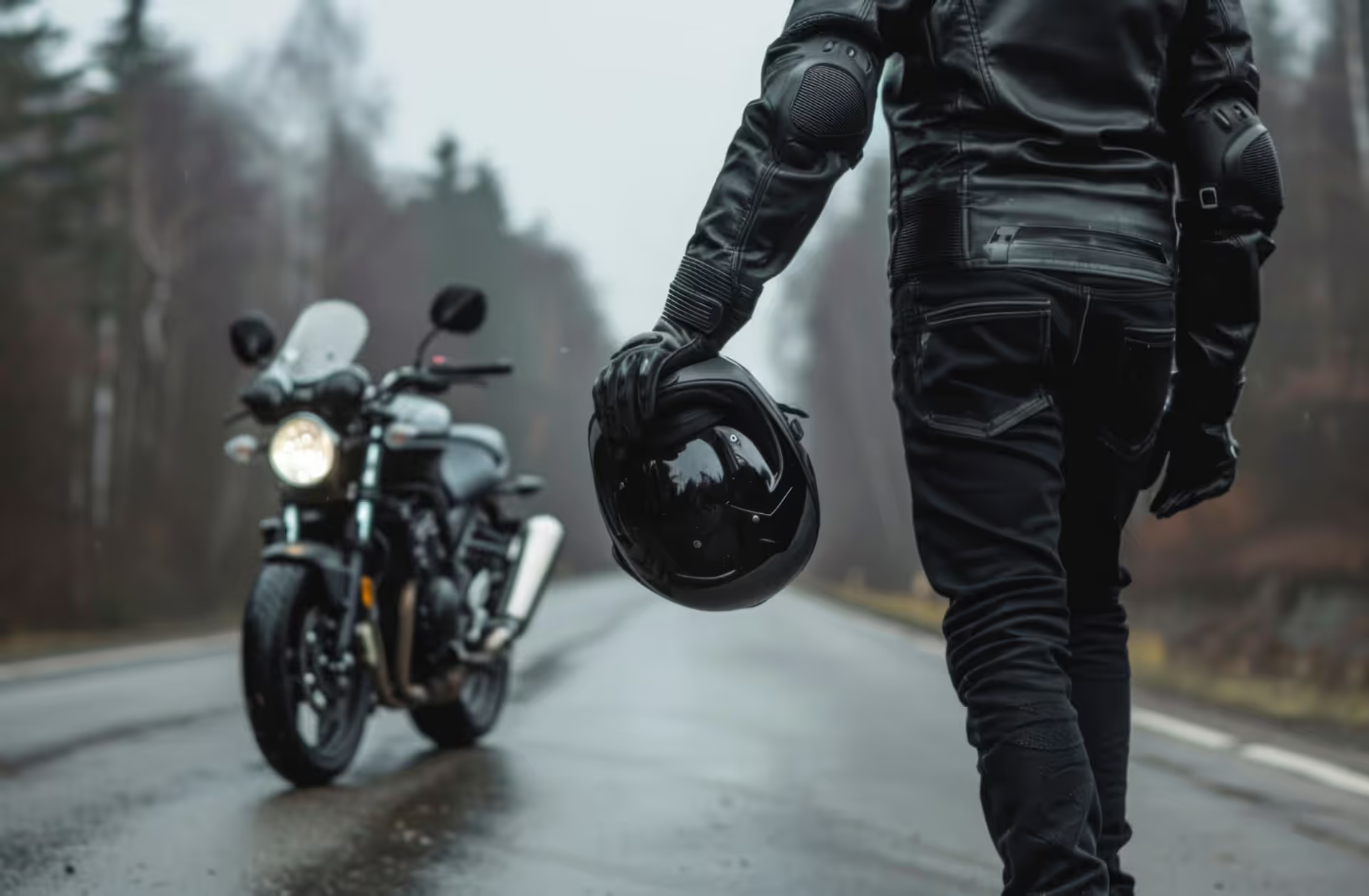
Protective gear exists on a spectrum from minimal to comprehensive, and where you land on that spectrum matters more than most new riders recognize. At minimum, a helmet rated for safety by recognized standards protects against the injury most likely to kill you. Beyond helmets, the protection hierarchy generally proceeds: armored jacket, armored pants, protective gloves, and proper boots. Full gear in appropriate conditions provides protection approaching what race suits offer professional riders; shorts and sandals offer none.
The financial investment in quality gear often approaches or exceeds the cost of an entry-level motorcycle. A premium helmet costs $400-800. A well-armored jacket runs $300-600. Pants with meaningful protection cost similar amounts. Quality gloves and boots add hundreds more. This investment seems substantial until you consider that a single unprotected slide on asphalt can cause injuries costing tens of thousands in medical bills, not to mention the human cost of permanent damage.
Gear needs vary by riding style. Sportbike riders pursuing aggressive street riding or track days need full leather suits with comprehensive armor. Adventure riders require gear that handles temperature extremes, weather variation, and the possibility of off-road crashes. Cruiser riders often prioritize style alongside protection, seeking gear that communicates appropriate aesthetic while still providing meaningful safety benefits. Urban commuters need practicality — gear that goes on and off easily and transitions to workplace settings.
Training and Insurance
Professional training provides skills and confidence that self-teaching cannot match. The Motorcycle Safety Foundationoffers courses for riders at all levels, from complete beginners who have never touched a motorcycle to experienced riders seeking to refine advanced techniques. Most US states accept MSF course completion in place of riding tests for license endorsement. Beyond licensing benefits, trained riders have statistically lower accident rates and typically receive insurance discounts reflecting that reality.
Motorcycle insurance rates vary dramatically based on the motorcycle category, rider demographics, and coverage levels. Sportbikes cost substantially more to insure than other categories, reflecting their accident involvement rates. Young riders pay more than older riders. Comprehensive coverage including theft and collision protection costs far more than liability-only minimums. Smart buyers obtain insurance quotes before purchase, as the annual premium difference between motorcycles may exceed the purchase price difference.
Maintenance demands differ by motorcycle complexity and intended use. Simple air-cooled engines with basic electronics require minimal attention. Sophisticated sportbike engines with complex valve trains demand more frequent service at higher prices. Chain-driven motorcycles require regular adjustment and lubrication; shaft and belt drive alternatives reduce this burden. Off-road use accelerates wear on virtually every component. Understanding these requirements before purchase prevents unpleasant surprises when service bills arrive.
Pro Tip: Get insurance quotes BEFORE purchasing. That affordable sportbike might cost more annually in insurance than a more expensive cruiser.
— Alex Johnson
Frequently Asked Questions
What type of motorcycle is best for beginners?
Road bikes (standards/naked bikes) and small cruisers offer the best combination of forgiving handling, comfortable ergonomics, and manageable power for new riders.
What's the difference between a road bike and a sportbike?
Road bikes have upright, comfortable positioning for all-around use. Sportbikes have aggressive, forward-leaning positioning optimized for performance and track riding.
Can an enduro be used for daily commuting?
Yes, but with compromises. Tall seat heights, limited fuel range, and basic wind protection make enduros less comfortable for pure street use than dedicated road bikes.
Is a cruiser good for a first motorcycle?
Yes — cruisers' low seat heights build confidence, and relaxed ergonomics are comfortable for learning. Start with a smaller displacement model (300-900cc).
Should I start on a sportbike?
Generally not recommended. Sportbikes' aggressive positioning and powerful engines challenge beginners. Start with a standard or beginner-friendly sportbike (Ninja 400, R3), then graduate to supersports with experience.
What motorcycle is best for highway riding?
Cruisers and touring motorcycles excel on highways with comfortable positioning and (often) wind protection. Large adventure bikes also perform well.
Which type of motorcycle is cheapest to own?
Road bikes (standards) typically offer the lowest total ownership cost — affordable purchase prices, lower insurance, and reasonable maintenance.
Can I do light off-road on a road bike?
Very light gravel is possible with caution, but road bikes lack the suspension, clearance, and tires for real off-road riding. For anything beyond well-maintained gravel roads, you need an enduro or adventure bike.
Conclusion: Your Journey Starts Here
Choosing between a road bike, enduro, cruiser, or sportbike isn't about finding the "best" motorcycle — it's about finding YOUR best motorcycle. Each category excels in different areas:
- Road Bikes offer unmatched versatility and accessibility
- Enduro Bikes open worlds beyond pavement
- Cruisers deliver style, comfort, and emotional connection
- Sportbikes provide ultimate performance and adrenaline
The right choice depends on how you'll ride, where you'll ride, your experience level, and what experience you're seeking. A commuter needs different qualities than a weekend canyon carver. A trail explorer needs different capabilities than a highway cruiser.
Remember: You can always own multiple motorcycles later, or upgrade as your skills and interests evolve. Many riders progress through several categories throughout their motorcycling journey. Your first motorcycle doesn't have to be your last.
— Alex Johnson
Take your time with this decision. Sit on motorcycles at dealerships. Take the MSF course. Rent different types if possible. Talk to riders who own each type. The more information you gather, the better your choice will be.
The road — or trail, or canyon, or highway — awaits. Choose your motorcycle, gear up, and discover why millions of riders consider two wheels the ultimate form of transportation.
[content]
Ride safe. Ride smart. Enjoy the journey.
Related Stories
Read more
Read more

Content on edmmnatsakanyan.com is provided for general informational and educational purposes only. It is not intended to be, and should not be construed as, professional automotive, financial, leasing, or technical advice, nor as a substitute for consultation with qualified professionals.
The information provided on this website is for general informational purposes only and may include content related to cars, luxury vehicle leasing, automotive innovations, electric vehicles, and future mobility technologies. Use of this website does not create a professional, advisory, or client relationship between edmmnatsakanyan.com and the user.
Edmmnatsakanyan.com is not responsible for any errors or omissions, or for actions taken in reliance on the information contained on this website.